CADRE HARMONISÉ ASSESSMENT SHOULD NOT BE TURNED INTO POLITICAL PROPAGANDA
I have taken note of attempts by some opposition voices to twist the October 2026 Cadre Harmonisé food security assessment into a political campaign message. This is deeply unfortunate.
Food and nutrition insecurity is a serious national challenge, and as Minister responsible for Agriculture and Food Security, I will not shy away from acknowledging it. But we must also be honest about what the data actually says.
The Cadre Harmonisé did not originate from me, nor the Federal Ministry of Agriculture and Food Security, it is an assessment tool designed by Permanent Inter-State Committee for Drought Control in the Sahel (CILSS) and its regional and technical partners, with support from organisations including FAO, WFP, FEWS NET, UNICEF and IPC., to identify food and nutrition security risks and help governments and development partners respond early. It is not an election forecast.
The assessment does not say that 33.5 million Nigerians will face food insecurity because President Bola Ahmed Tinubu, GCFR, is re-elected in 2027. That interpretation was added for political purposes. It is disheartening to see food insecurity being used as a political tool, exploiting the struggles of Nigerians is not patriotism, but a great disservice to our nation.
The projected figure of 33.5 million relates to the June to August 2027 period and must be understood within the seasonal nature of food insecurity. In fact, the assessment shows that the projected population expected to face severe food and nutrition insecurity declined from 34.8 million in the corresponding 2026 projection to 33.5 million in 2027. It is also worth noting that this framework does not conduct retrospective analysis following the passing of the projected period to determine whether the projected figures were right or wrong.
The assessment itself identifies several factors driving food and nutrition insecurity. Most of which are influenced by global events and environmental changes. Climate change is the biggest culprit. Inconsistent rainfall and prolonged dry spells have made it difficult for our farmers to rely on rain-fed agriculture. The Super El Niño phenomenon has also disrupted weather patterns in many regions, affecting planting seasons and crop production.
It does not say that these challenges are a consequence of the continuation of any particular political administration.
What the assessment gives us is an early warning. Our responsibility is to respond to that warning.
That is exactly what the government is doing under the leadership of President Bola Ahmed Tinubu, GCFR.
We are expanding access to fertiliser and other agricultural inputs, increasing mechanisation, expanding irrigation and dry-season farming, strengthening agricultural financing, improving access to farmland, investing in storage and processing, developing value chains and promoting climate-resilient agriculture.
Importantly, improved security in several farming communities is also allowing farmers who were previously unable to access their farmlands to return to their farms and resume production. This is critical because food security cannot be achieved without farmers being able to safely cultivate their land. Areas such as Marte and Guzamala in Borno State, which were previously inaccessible to data collectors, have experienced improved stability, allowing the Cadre Harmonisé exercise to be conducted in these areas.
We have also made significant progress in fertiliser distribution and local blending, supported smallholder farmers across the country, advanced major mechanisation partnerships, expanded dry-season production and strengthened agricultural financing through the Bank of Agriculture.
These interventions will not solve every problem overnight. Food insecurity is a longstanding and structural challenge that has developed over many years and predates this administration. But the important thing is that we are confronting it directly, investing in production and building the systems needed to make our food supply more resilient. It is however important to acknowledge that agriculture has recorded significant progress since President Bola Ahmed Tinubu, GCFR, assumed office.
As Minister, I accept the responsibility that comes with this challenge. When the data identifies a risk, our duty is to act on it, not to hide from it.
I therefore urge political actors to exercise responsibility when discussing food security data. Millions of Nigerians are affected by these challenges. Their food, livelihoods and wellbeing should never be reduced to political talking points.
We welcome scrutiny. We welcome constructive criticism. But there is a clear difference between legitimate political debate and deliberately misrepresenting a technical assessment for electoral propaganda.
The Cadre Harmonisé has given us important information about where vulnerabilities may emerge. We will use that information to strengthen our interventions, support farmers, protect livelihoods and improve access to safe, nutritious and affordable food.
That is our responsibility, and that is the work we remain committed to.
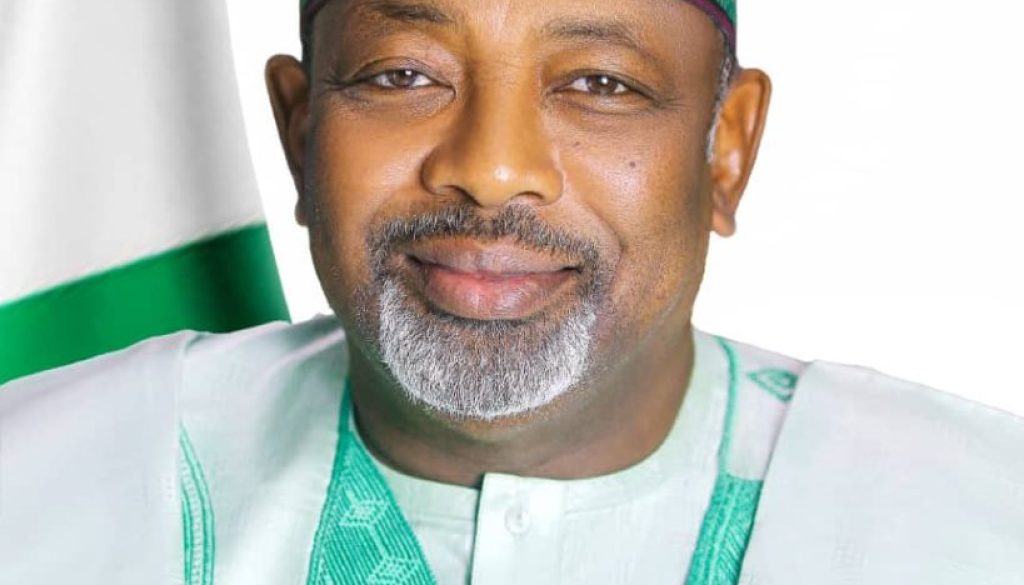
Senator Abubakar Kyari, CON
Honourable Minister of Agriculture and Food Security