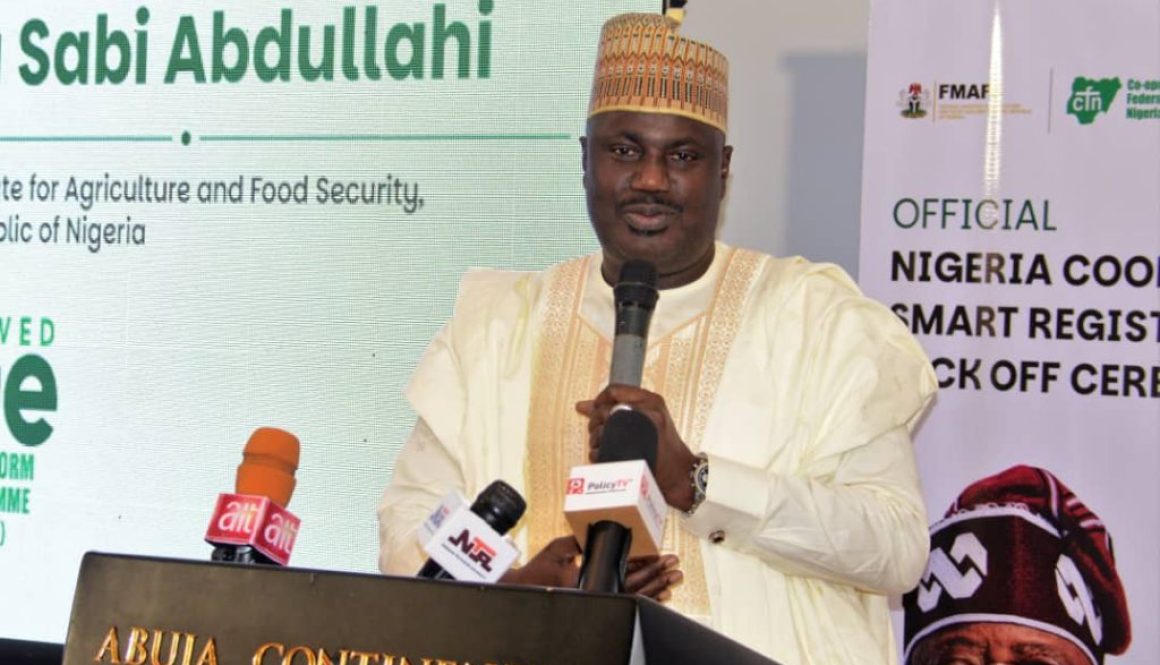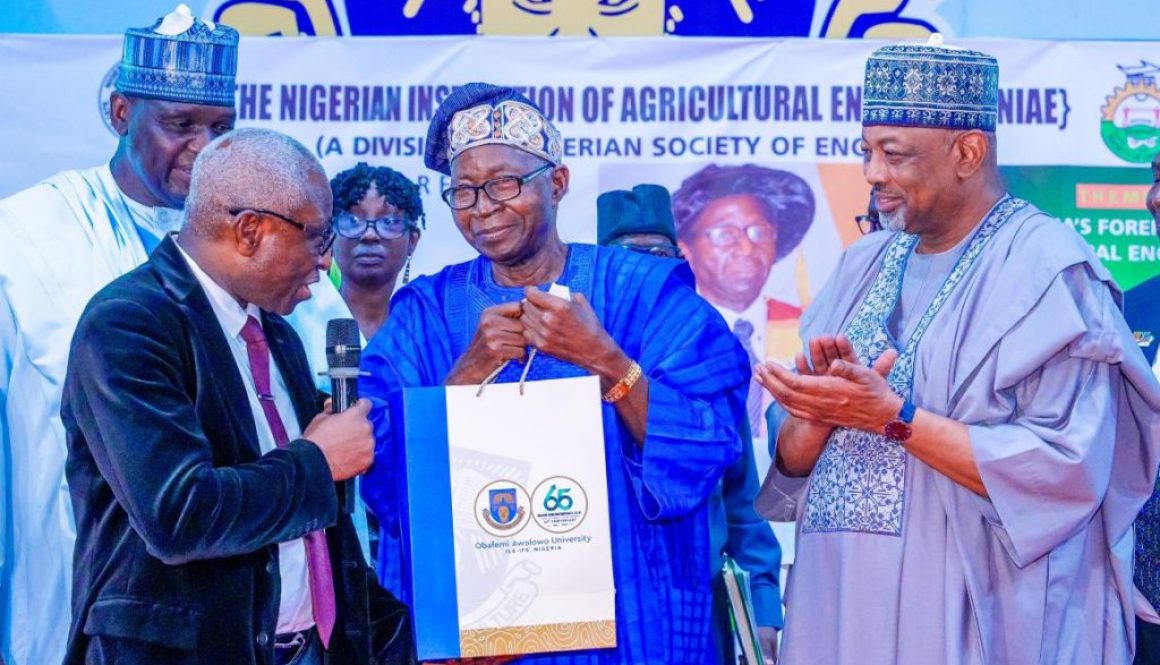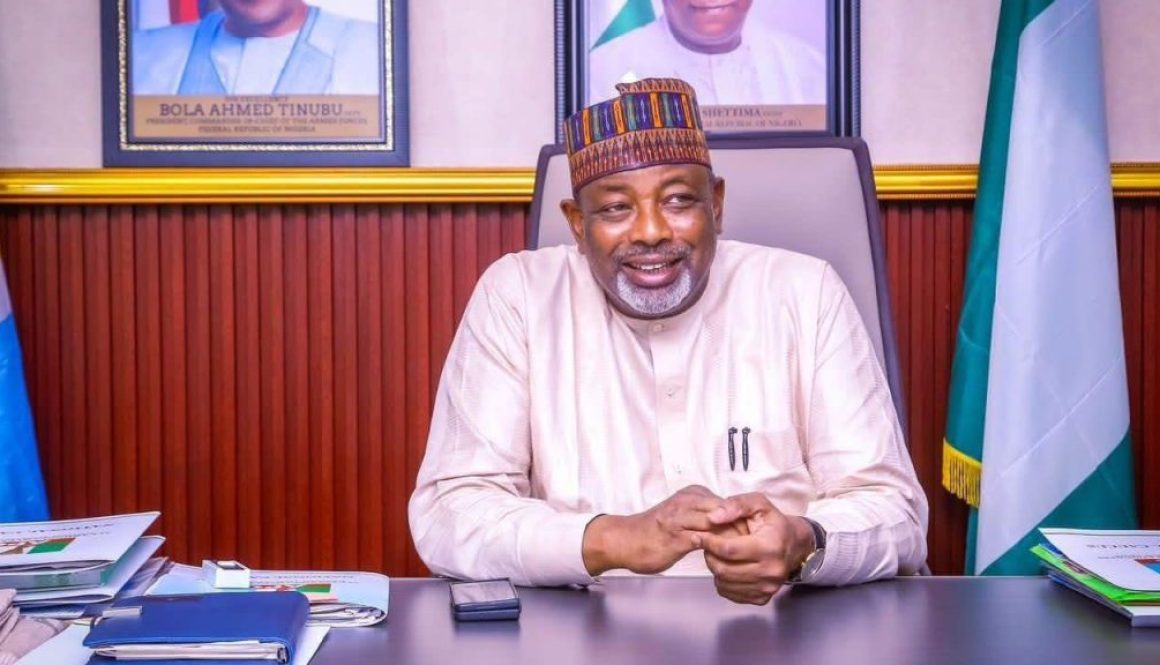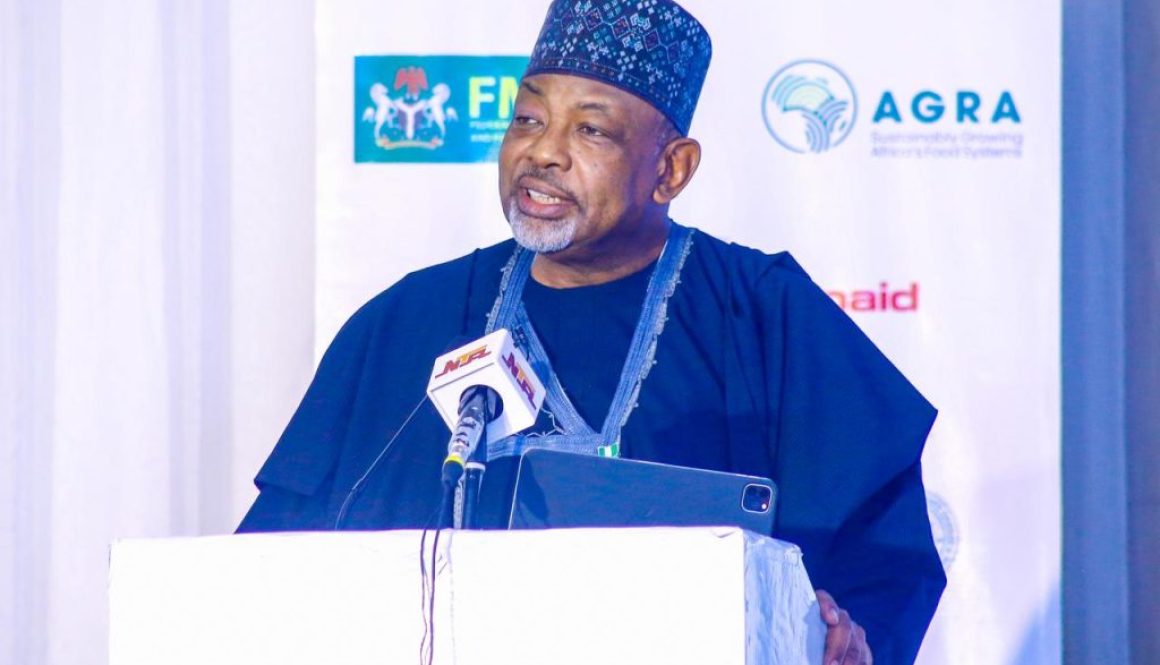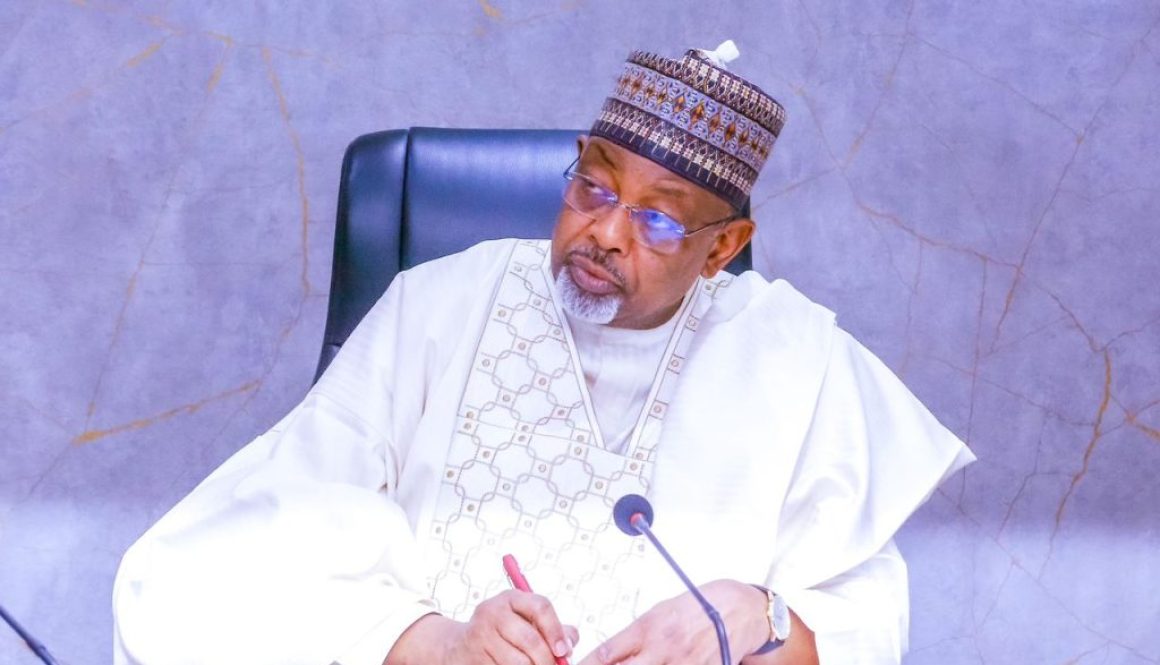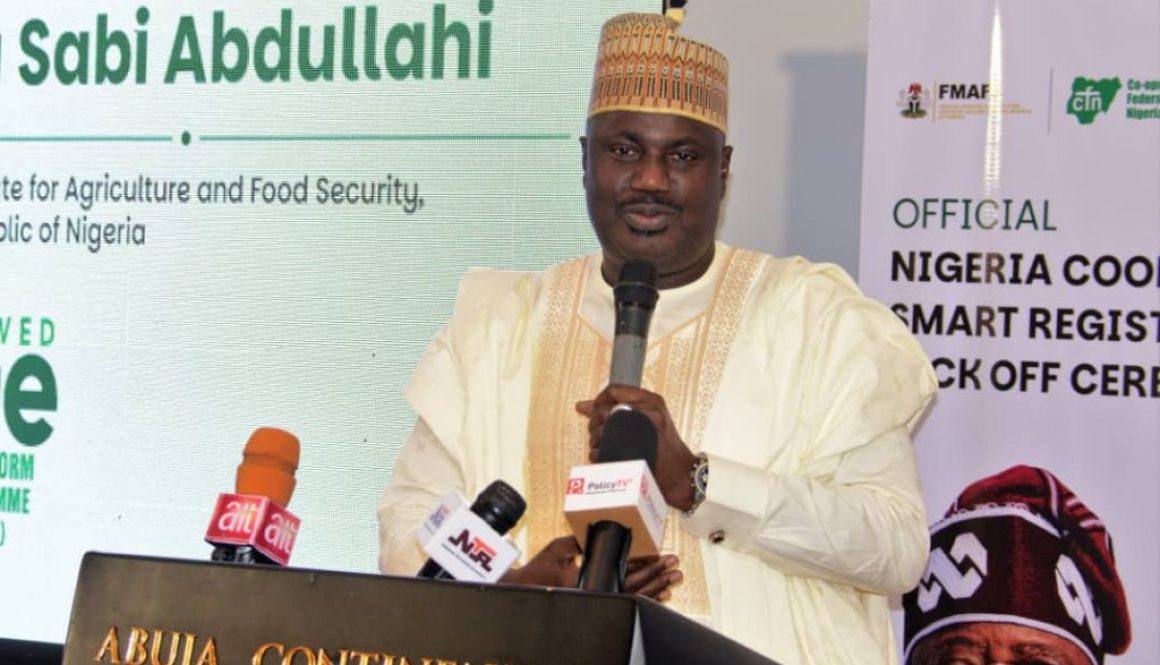
The Minister of Agriculture and Food Security, Sen. Abubakar Kyari has stated that active participation of Youth in Agriculture would Fast-track Development in the Sector, Increase Production, and Revitalize Agribusiness as well as achieve Food and Nutrition Security.
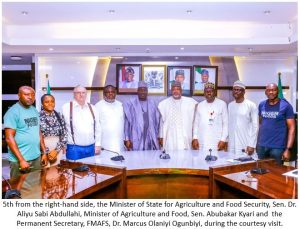
The Minister made this disclosure during the courtesy visit by the United Nation (UN) Delegation led by the Assistant Secretary General Youth Affairs, Dr. Felipe Paullier, in Abuja recently.
Kyari stated that Federal Government is making deliberate efforts to prioritize youth in the agricultural ecosystem through financial inclusion, economic opportunities, and enabling environments.
The Minister revealed several key government initiatives driving Nigeria’s agricultural transformation, including the operationalization of the National Agricultural Development Fund (NADF) and the N1.5 trillion recapitalization of the Bank of Agriculture (BOA), one of the largest agricultural finance commitments in the country’s history.
According to him, ‘’these measures will expand access to affordable finance for youth led agribusinesses’’.
He stressed that through targeted programmes, such as mechanization, access to finance, digital platforms, and extension services, the government would empower a new generation of farmers.
He highlighted the role of Nigerian youth like young innovators namely Samson Ogbole, Femi Adekoya, Atinuke Lebile, and Azeez Salawu played in shaping policy and practice, as well as pioneering projects in soilless farming, drone technology, biofortified crops, and ecosystem coordination.
In his remarks, the UN Assistant Secretary General Youth Affairs, Dr. Felipe Paullier stated that the Youth office was established by the General Assembly to lead the engagement and advocacy for the advancement of youth related issues across the United Nation’s Members.
He added that the office would foster increase in access to resources, land, technology, information and boost youth participation in policy dialogue
In his welcome address, the Permanent Secretary in the Ministry, Dr. Marcus Olaniyi Ogunbiyi revealed that the procurement of 2,000 tractors and over 9,000 agricultural implements, the largest mechanization drive in Nigeria’s history aimed at enhancing productivity and creating decent employment opportunities for youth in agribusiness
He stated that ‘’this is the largest mechanization initiative in Nigeria’s history. This bold intervention will expand access to modern machinery, enhance productivity, and create new opportunities for youth in machinery operation, maintenance, and agribusiness services. It is part of our deliberate effort to make agriculture a field of innovation, dignity, and decent work for the next generation’’During his Goodwill message, young Agriprenur, Tobi Jeremiah Olanrewaju lauded the Federal Government for providing financial intervention through National Agricultural Development Fund (NADF), free Agricultural inputs and implements to young farmers in Nigeria.
The Federal Government has emphasized the need for stakeholder collaboration to empower Nigerian youth in agricultural sector, highlighting their potential to drive climate-resilient and finance-enabled agrifood systems.
The Minister of Agriculture and Food Security, Sen. Abubakar Kyari, made the call today at the First edition of the National AgriBusiness Strategy Youth Dialogue held in Abuja, recently with the themed “Building Climate-Resilient and Finance-Enabled Pathways for Youth in Agrifood Systems in Nigeria”.
The Minister emphasized that the Dialogue is a clarion call to harness the vibrancy and tenacity of the youth, who represent over 70% of Nigeria’s population, to reshape the sector for job creation, food availability, and wealth creation.
Sen. Kyari stressed that “When we empower our youth with access to finance and opportunity, we are not simply supporting individual enterprises. We are shaping markets, strengthening resilience and defining the future of our agrifood systems’’.
He noted that despite the resilient production systems, agriculture – the backbone of economic activity across Africa, continues to face persistent structural challenges hence the compelling need to harness the energy, innovation, and leadership of the young people to drive the transformation of agrifood systems.
According to him, “The integration of the Sustainable Development Goals, the Comprehensive Africa Agriculture Development Programme, and the African Agricultural Youth Strategy into our National Agricultural Technology and Innovation Policy demonstrates our clear commitment to building a sustainable, inclusive, and innovation-driven agricultural sector.”
He revealed that Nigeria identifies with its strategic agriculture transformation partner – the Alliance for a Green Revolution in Africa (AGRA), which among others, recognizes the place of innovation, creativity, efficiency, enterprise development access to finance and strong networks of collaboration among young people as the core of building competitive and resilient food systems.
He reiterated Nigeria’s commitment as reflected in its recent emergence as Chairperson of the 49th Session of the International Fund for Agricultural Development (IFAD) positioning the country to shape global agricultural priorities for youth inclusion and sustainable financing.
He Pointed out that “We are backing our commitment with action, Through strategic collaboration with the Central Bank of Nigeria, National Agricultural Development Fund (NADF), the Bank of Agriculture (BOA), the Nigeria Agricultural Insurance Corporation (NAIC) and other key financial institutions, the President Bola Ahmed Tinubu-led Administration has expanded access to agricultural finance, derisked rural investment, and unlocked capital for youth led enterprises.”
He added that “These reforms are strengthening credit delivery, scaling climate risk insurance, and extending digital financial services to underserved communities, building a more resilient and youth driven agrifood system,”.
He further said that the National and Global positioning underscores the need to translate leadership into tangible solutions for the youth, therefore calling for robust mentorship frameworks, expanding market access and fostering strategic partnerships so as to empower young entrepreneurs to build viable and competitive agribusiness.
While highlighting the need for actionable commitments, the Minister added, “A strategy on paper is not enough. Domestication – through state-level adoption, stakeholder alignment, resource mobilization, and measurable implementation – is where real impact lies.”
In his welcome address, Permanent Secretary of the Federal Ministry of Agriculture and Food Security, Dr. Marcus Ogunbiyi, stated that the Dialogue aims to leverage resilience and finance in agriculture, bringing together young innovators and leaders to shape the sector’s landscape.
Dr. Ogunbiyi noted that food security, a national priority under President Bola Ahmed Tinubu’s Renewed Hope Agenda, cannot be achieved without securing the future of Nigeria’s youth in agriculture, noting that challenges like climate variability, limited finance, weak infrastructure, and barriers to land, technology, and markets necessitate this dialogue to encourage young people’s participation.The Ministry is committed to creating an enabling environment where young Nigerians see agriculture as a first-choice career – modern, profitable, technology-driven, and globally competitive. “We must move from rhetoric to results, from fragmented interventions to coordinated impact, and from pilot projects to scalable national programs,” he emphasized.
The Permanent Secretary stated that the Ministry’s focus on domesticating the African Agribusiness Youth Strategy and institutionalizing the Youth Agripreneurs Programme Index (YAPI) for planning, monitoring, and evaluation, called for actionable commitments, clear timelines, and defined responsibilities, amplifying young people’s voices as co-creators of policy and implementation.
During his presentation, Senior Specialist, Continental and Regional Engagement for Alliance for a Green Revolution in Africa (AGRA), Mr. David Adama, said that “We are no longer just talking about agriculture; we are talking about food systems. The ‘Kampala Era’ demands a shift toward total inclusivity, ensuring that whatever government does takes into account young people, women, and vulnerable groups.”
Mr. Adama added that “Our target is clear: we must empower at least 30 percent of youth and 30 percent of women in every food system value chain, while reducing the youth gap between men and women by 50 percent. We aren’t just here to talk; we are here to track measurable progress.”
He noted that “Nigeria is leading the way as the first country to domesticate the Africa Agribusiness Youth Strategy through this dialogue. To the young people here: you are leading this conversation. Take advantage of this opportunity to ensure your ideas are woven into the national plan.”
Highlight of the event was inspection exhibition stand led by the Minister of Agriculture and Food Security and other stakeholders
In attendance were Representative of the Minister of Water Resources, ECOWAS officials and other relevant stakeholders
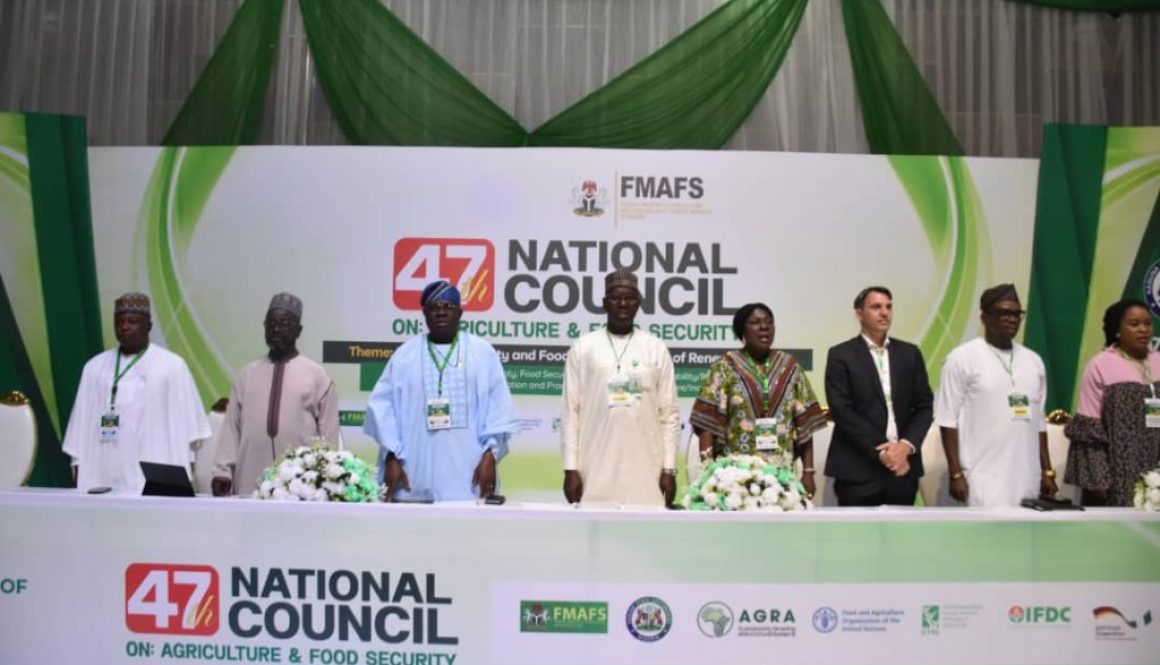
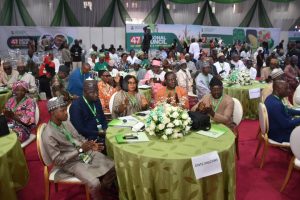
Federal Government has declared open the Technical Session of the 47th Regular Meeting of National Council on Agriculture and Food Security (NCAFS) to achieve food sovereignty and revolutionize the agricultural ecosystem
Speaking during the Technical Session of the NCAFS, held at Musa Yar’Adua Conference Hall in Kaduna ,Kaduna State on Monday, 3rd November 2025, the Permanent Secretary, Federal Ministry of Agriculture and Food Security, Dr. Marcus Ogunbiyi said that the Technical Session would enable stakeholders to develop strategies for food sovereignty and reduce the country’s reliance on imports.
Dr Marcus Ogunbiyi stated that ” the theme, ‘Food Sovereignty and Food Security in an Era of Renewed Hope’, aligned with President Bola Tinubu’s Renewed Hope Agenda, which prioritises agriculture for economic recovery and transformation.”
He noted that ” the technical session as the council’s engine room,where memoranda from states, partners, and the private sector were reviewed to guide national agricultural policy.”
He added that “the platform ensure that stakeholders engage in robust, evidence-based discussions that will ultimately shape the resolutions to be taken at the Counicl Session on Thursday”
“This process is central to the strength and credibility of the National Council on Agriculture and Food Security. It ensures that the recommendations we advance are inclusive, well-informed, and grounded in the realities of our diverse agricultural landscape. “
“Our task in this Technical Session is, therefore, not only to review memoranda but to build consensus to blend knowledge from policy, research, and practice into actionable strategies that would drive transformation across the value chains”, he added.
Ogunbiyi urged the participants to evaluate what has worked, identify emerging gaps, and collectively chart a new course for Nigeria’s agricultural transformation and to leverage on the opportunity to share experiences and innovations from their respective states, especially on climate-smart agriculture, extension reforms, agribusiness development, and digital transformation.
Speaking further, he commended the participation of development partners such as FAO, IFAD, WFP, AfDB, World Bank, USAID, IFPRI, amongst others for their technical and financial support which continues to strengthen the collective capacity to achieve the Sustainable Development Goals, particularly SDG 2-Zero Hunger.
He, therefore, urged the participants to approach the deliberations with focus and a spirit of collaboration to achieve productive and meaningful outcomes that would strengthen Nigeria’s journey toward food sovereignty and food security.
Earlier, in his welcome address, the Hon. Commissioner, Ministry of Agriculture, Kaduna State, Hon. Murtala Mohammad Dabo said the Government and good people of Kaduna State are delighted to host the national dialogue on the future of agriculture – a sector that binds every part of the country, sustains the communities, and remains vital to collective progress.
He added that Kaduna State is proud to open its doors to the nation, and to serve as the meeting ground for this year’s Council deliberations, pointing out that this Council, over the years, has evolved into far more than a policy platform.
According to him, “It has become a space for reflection, learning, and renewal, where states share experiences, forge collaborations, and align strategies for national growth. We are confident that the 47th Session will carry forward this proud tradition and set new benchmarks in our pursuit of food security and agricultural transformation. ”
The Commissioner further stated that Kaduna State, under the visionary leadership of His Excellency, Senator (Dr.) Uba Sani, CON, agriculture has been reimagined as a driver of opportunity, peace, and prosperity, noting his unwavering support and his belief that no society can prosper without empowering its farmers.
He, therefore expressed deep appreciation to the Honourable Minister of Agriculture and Food Security for the confidence reposed in Kaduna to host this prestigious gathering, and to all our colleagues from the 36 states and the FCT for their friendship and partnership.
In his remarks, Director Planning and Policy Coordinator, Mr. Ibrahim Tanimu reiterated that the theme was a call to action and a shared vision, stressing that it challenges us to strengthen Nigeria’s capacity to produce the food we consume and reduce external dependence to ensure that every Nigerian household has reliable access to safe and nutritious food.
He noted that we are to continually provide an enabling environment to actualize the country’s agricultural potential with the engagement of individuals and groups in productive ventures.
The highlight of the event was the presentation of memos from various project departments of the Ministry, State Offices, and Research Institutes, amongst others.
In attendance were representatives from Actionaid, GiZ, International Fertiliser Development Centre, IFDC, and AGRA, amongst others.
The Federal Ministry of Agriculture and Food Security (FMAFS) has assured of its readiness to revitalize the sugar value chain, expand sugar cane production and reduce the cost of importation as well as create jobs.
The Minister made this known during a courtesy visit by the delegation from Niger Foods Security Systems and Logistics Company Ltd, led by its Executive Chairman, Mr. Sammy Adigun, at the Ministry’s Conference Room in Abuja, recently, the Minister of Agriculture and Food Security, Sen. Abubakar Kyari stated that the Ministry would partner with credible investors to achieve self – sufficiency in sugar production and reduce importation, which is in line with the National Sugar Master Plan.
He stated that the initiative would create a favourable investment environment, attract both domestic and international capital in the sugar sub sector, and galvanize the agricultural ecosystem.
He revealed that the Ministry would work closely with the National Sugar Development Council and critical stakeholders to unlock the potential in the sugar value chains.
The Minister reaffirmed the commitment of President Bola Ahmed Tinubu’s administration Renewed Hope Agenda in the Agricultural sector, which is geared towards achieving food and nutrition security
In his remarks, the Minister of State for Agriculture and Food Security, Sen. Dr. Aliyu Sabi Abdullah stated that the revitalization of the sugar sub sector would create more jobs for Nigerian farmers, especially women and youth farmers.
During his presentation, the Executive Chairman, Niger Foods Security, Mr. Sammy Adigun stated that ‘’Niger Foods plans to cultivate 50,000 hectares of sugarcane with a target output of 2 million Tonnes, aligning with the Federal Government’s vision of reducing the nation’s dependence on sugar imports.
He added that ‘’ Last year, the company successfully recorded 60,000 Tonnes of sugarcane from just 3 hectares, a feat it believes can be expanded nationwide with adequate support’’
Mr. Adigun revealed that ‘’ 250,000 hectares of land have been secured in Niger State for sugarcane cultivation, which will require an estimated $3 billion investment in sugar plants. This initiative is expected to provide significant employment opportunities and strengthen Nigeria’s agro-industrial value chain’’.
Niger Foods Security systems and logistics Company Ltd is a Public – Private Partnership, partly owned by the Niger State Government, with Focus on enhancing Agriculture and Promoting Food Security in the State.
The Federal government through the Nigeria Security and Civil Defence Corps (NSCDC) has announced the deployment of 10,000 agro rangers across the country.
This is in a move to curtail insecurity across the food producing belt of the country which has negatively impact food production across the country in recent times.
The Special Assistant to President Tinubu on New Media, Olusegun Dada disclosed this in a post on his official X handle.
According to the statement, the agro-rangers initiative is a partnership between the Ministry of Agriculture and Food Security and the Nigeria Security and Civil Defence Corp (NSCDC) noting that agro rangers will help protect farmers against malicious destruction of farmlands as well as farmer herder conflict.
The post reads, “As part of ongoing efforts to enhance food security in the Northern region and other parts of the country, the FG through the Nigeria Security and Civil Defense Corps(NSCDC) has deployed over 10,000 Agro Rangers across 19 states and the FCT.”
“The Agro Rangers will, among other things; safeguard farmlands and protect farmers from escalating attacks, mediate conflicts between farmers and herders, and prevent malicious destruction of farmlands. While the food inflation crisis in the country is a function of many factors, insecurity has been a long term challenge and this collaboration between the NSCDC and the Federal Ministry of Agriculture and Food Security is expected to solve a major challenge faced by farmers across the country.”
Backstory
The deployment of agro-rangers stems from earlier plans by the federal government through the National Economic Council (NEC) in February this year to establish agro-rangers as a short-term solution to the insecurity in the country pending when the long-term solution of state police is achieved.
Widespread insecurity, particularly in the northern region, has forced many farmers to abandon their lands, resulting in a significant decrease in food production and contributing to the rising food prices nationwide. Just last week, attacks on farming communities in Benue State, known as the nation’s food basket, led to the tragic deaths of over 20 people.
As of July 2024, food inflation has surged to 40.87%. In response, the federal government has floated the idea of establishing state police forces. However, this proposal cannot be implemented through executive orders or solely by an act of parliament from the National Assembly, even though the bill to create state police has already passed its second reading in the legislature.
THE OCCASSION OF FARMERS FIELD SCHOOL FOR OIL PALM FARMERS ON NURSERY ESTABLISHMENT, FIELD ESTABLISHMENT, HARVESTING AND MARKETING HELD AT HOTEL CODIAL LIMITED, CHIME AVENUE, NEW HEAVEN, ENUGU, ENUGU STATE, ON WEDNESDAY, 25TH AUGUST, 2021.
Please recall that approval was given for the Value Chain to convene Farmers Field School on nursery establishment, field development, harvesting and marketing for oil palm farmers/associations from the twenty four (24) oil palm producing States; Abia, Akwa Ibom, Cross River, Rivers, Bayelsa, Imo, Anambra, Ebonyi, Enugu, Delta, Edo, Ondo, Ogun, Osun, Oyo, Ekiti, Benue, Kwara, Kogi, Nasarawa, Plateau, Taraba, Adamawa and Kaduna at Hotel Codial Limited, Chime Avenue, New Heaven, Enugu, Enugu State. The workshop which held on Wednesday, 25th August, 2021 was organised by the Oil Palm Value Chain and is aimed enhancing the capacity and skill of oil palm farmers in areas of nursery establishment, field development and maintenance, harvesting and marketing.
The training/capacity building was attended by 80No. participants, drawn from Abia, Akwa Ibom, Cross River, Rivers, Bayelsa, Imo, Anambra, Ebonyi, Enugu, Delta, Edo, Ondo, Ogun, Osun, Oyo, Ekiti, Benue, Kwara, Kogi, Nasarawa, Plateau, Taraba, Adamawa and Kaduna. Representatives from Enugu Young Farmers Association (ENSYFA), NIFOR, Oil Palm Value Chain and Federal Ministry of Agriculture and Rural development (FMA&RD), News Agency of Nigeria (NAN), Radio Nigeria, NTA, TVC News also attended the training.
Welcome Addresses
The welcome address was delivered, by Mr Nwaogu Peter N, Enugu State Coordinator. While welcoming participants, he underscored the importance of the training and encouraged them to make good use of it, to enable them improve their knowledge and skills for effective nursery establishment, field development and maintenance, Harvesting and marketing.
He concluded by thanking the Ministry for organizing this training and encouraged participants to transfer the knowledge and skills that would be acquired to other oil palm farmers.
Address by the Honouable Minister, Federal Ministry of Agriculture and Rural Development.
The representative of the HMA, Mr B. C. Ukattah (Deputy Director-Tree Crops) in his address informed the participants that oil palm value chain is among the commodity value chain being promoted by FMARD. He further disclosed the objectives of the Value Chain and the strategies for addressing the shortfall such as production and distribution of improved tenera oil palm seedlings for hectarage expansion, encouraging Semi–Wild Grove (SWG) Yield enhancement by the gradual replacement of old and unproductive palms with improved planting materials, promoting the use of motorized harvesters, medium scale processing equipment (MSPE) and automated nut cracker separator (palm kernel recovery), to enhance farm operations and increase production as well as building the capacities of oil palm farmers along the entire Value Chain etc. The HMA stated the main objective of the training which is to enhance the capacity and skill of oil palm farmers in areas of nursery establishment, field development and maintenance, harvesting and marketing.
He ended his address by encouraging farmers to be attentive and make best use of this opportunity to improve their knowledge and skills on nursery establishment, field development, harvesting and marketing.
Technical Session
During the technical session lead paper was delivered by Mrs. Philomena Ehionehen on Best Practices in oil palm Nursery establishment/principles and practices in oil palm plantation development; this paper amongst others disclosed, the procedures for establishing and managing a good oil palm nursery as well as Good Agricultural Practices (GAP) for oil palm plantation development.
Practical Session/field demonstration on nursery establishment/Field development:
Participants were taken to the field, and the technician conducted Field demonstration on how to prepare oil palm nurse ry and field establishment.
Questions/Issues/Discussions
After the presentation by the resource person, and the practical session, participants made the following appeal practices.
Need for the Ministry to conduct more training for farmers to enhance their skills in good agricultural
Need to provide free inputs such as improved tenera sprouted nuts to farmers
Need for the Ministry to continue to provide support for farmers in the areas of oil palm processing, for value addition.
Need for the value chain to tackle the challenge of importation of crude palm oil into the country.
Adequate support for plantation development, research and the need for the Value Chain to go through commodity associations in implementing its activities.
Need for the Ministry to reach out to farmers/Associations (OPGAN and NPPAN) directly.
Response
In response to the above, the following comments were made.
Participants were informed that the Ministry will continue to train farmers in nursery establishment/field development for best agricultural practices.
The participants was also informed that the Ministry will continue to give out inputs such as improved tenera sprouted nuts free to farmers for plantation expansion
Participants were encouraged to replicate the knowledge, skills/techniques acquired to other oil palm farmers in their localities.
On the issue of support for processing, research and plantation development, it was indicated that the Value Chain was already promoting the use of Medium Scale Processing Equipment (MSPE), Automated Nut Cracker Separator (palm kernel recovery) etc., for production of premium crude palm oil and vegetable oil products, and encouraging farmers to access credit from Bank of Agriculture (BOA), to realize their agricultural projects.
Participants were informed that the Value Chain was in active collaboration with NIFOR in the areas of research and seedling production for plantation development.
They also, were informed that the Value Chain is in active collaboration with different commodity associations in the Value Chain.
OIL PALM VALUE CHAIN STAKEHOLDERS FORUM HELD AT HOTEL CODIAL LIMITED, ENUGU, ENUGU STATE ON TUESDAY, 24TH AUGUST, 2021.
The one-day Oil Palm Value Chain Stakeholders Forum, organized by the Federal Ministry of Agriculture and Rural Development was held on Tuesday, 24th August, 2021 at Hotel Codial Limited, Chime Avenue, New heaven, Enugu, Enugu State, with the theme: Addressing issues towards sustainable development of oil palm. The objective of the meeting was to discuss issues that can contribute to Nigeria’s Sustainable Exploitation of Oil Palm for economic development, address challenges faced by farmers as well as fashion out a robust roadmap for oil palm industry.
The meeting was attended by 73No participants drawn from Oil Palm Growers Association of Nigeria (OPGAN), Plantation Owners Forum (POFON), National Palm Produce Association of Nigeria (NPPAN), News Agency of Nigeria (NAN), Nigeria Television Authority (NTA), Nigeria Export Import Bank (NEXIM), and Central Bank of Nigeria (CBN), Enugu State Young Farmers Initiative, Enugu State Chapter, State Ministry of Agriculture and FMARD.
WELCOME ADDRESS
The Welcome Address was presented by Mr. Matthew Idu, the Honourable Commissioner of Agriculture, Enugu State. He expressed delight at the impressive attendance of States and other stakeholder representatives. He underscored the importance of the stakeholders meeting which is to critically examine/discuss issues that can contribute to Nigeria’s sustainable exploitation of oil palm for economic development, address challenges and chart a way forward for the oil palm industry.
The Hon Commissioner ended his speech by thanking the FMARD for organizing the stakeholders meeting which is apt under the Federal Government view to diversify the economy. The Hon Commissioner thereby wished all a fruitful deliberation.
ADDRESS BY THE PERMAMNENT SECRETARY, FEDERAL MINISTRY OF AGRICULTURE AND RURAL DEVELOPMENT
The representative of the Perm Secretary, Mr B. C. Ukattah (Deputy Director-Tree Crops) while welcoming the stakeholders expressed delight with the good attendance of the stakeholders despite the short notice. He maintained that oil palm value chain is among the commodities being promoted by the Ministry. The PS informed the meeting that Stakeholders forum is usually the first series of preliminary activities that are carried out prior to full implementation of oil palm value chain programme.
He further disclosed, the objectives of the Oil Palm Value Chain, which are; to expand area under improved oil palm, achieve import substitution, Improve the productivity of farmers (by increasing the yield), support upstream and downstream processing activities to produce quality crude palm oil and vegetable oil products, create employment opportunities for the youth and build the capacities of farmers along the entire value chain in the 27 oil palm producing States.
Consequently, the Permanent Sec stated that the aim of the forum is to critically examine and discuss issues that can contribute to Nigeria’s sustainable exploitation of oil palm for economic development, address challenges faced by farmers as well as fashion out a robust roadmap for oil palm industry, he however noted that this forum will avail all the stakeholders in the oil palm industry the opportunity to rub minds together in order to chart better ways towards moving the sub-sector forward for the benefit of farmers across the entire value chain.
The PS ended his address, by urging all to discuss exhaustively and proffer appropriate solutions/recommendations that will help to address the challenges of the oil palm industry and move the oil palm subsector forward.
5.0 GOODWILL MESSAGES
Oil Palm Growers Association of Nigeria (OPGAN)
The OPGAN president, Barr Joe Onyiuke in his good will message thanked the Federal Ministry of Agriculture and Rural Development for convening this stakeholders meeting which is aimed at gathering the who and who in the oil palm sector to brainstorm and map out strategies towards the development of a sustainable oil palm subsector. He also expressed gratitude to the HMA for the numerous grants and subsidies the Association has benefited so far through the provision of free improved nuts from NIFOR and oil palm equipment/machineries such as oil palm tricycles, oil palm mills, nut crackers and separators, motorized harvesters at subsidized rates.
Barr Onyiuke further noted that the thriving oil palm sector is an imperative for economic growth and development of the Country and that the oil palm value chain will not only contribute significantly to the economy but can also serve as impetus or economic diversification.
He also thanked the CBN Governor, Mr Godwin Emefiele for his massive investment under the anchor borrowers programme to boost local production which he noted has reduced annual oil palm importation by about 22% from $500 million to $42.5 million in the last one year. He underscored the need for massive sustainable funding of the organized smallholder oil palm farmers/growers since they consist about 80% of the market.
In conclusion, he assured all in Oil Palm production that the nation is richly blessed as the sector holds the ace and will propel Nigeria to her economic growth and development.
OP Nursery JV Limited
The General Manager, OP Nurseries JV Ltd, Kehinde Sotonwa in his good will message welcome all the stakeholders while noting that the meeting was to identify and proffer solutions to the issues bewildering oil palm production in Nigeria.
He informed the forum, that the OP Nursery JV Limited is into a joint venture with the NIFOR for seeds/seedlings production, which he noted is a vehicle to mitigate the proliferation of un-guaranteed, low quality oil palm seed/seedlings that is almost becoming a norm.
He stated that their mission is to strengthen NIFOR’s capacity and quarantined availability of high yielding Tenera seeds/ seedlings to oil palm smallholder farmers and plantation nationwide.
He concluded by congratulating the HMA and the staff of the oil palm value chain for convening the stakeholders meeting and wished all a successful deliberation
Solidaridad
The Programme Manager, Solidaridad-Nigeria, represented by Mr. Ernest Ita, in his goodwill message applauded FMARD for convening the Stakeholders’ meeting, which he noted is very apt especially now that the Federal Government is geared to diversify the economy. He further informed the meeting that they have signed an MOU with FMARD to attain self-sufficiency in agriculture and diversification of her economy by providing technical support to government in the development of the oil palm sector.
Mr. Ita also enumerated some of their achievements to include; Profiling 15,500 smallholder oil palm farmers, mapping of 9,600 smallholder oil palm farms, increase women participation in oil palm and vegetable oil production, technological upgrade for 8 Artisanal palm oil mills, set up 16 oil palm nurseries with 36,000 improved sprouted nuts from NIFOR etc.
He informed the meeting that Solidaridad has built a rich database for farmers across the country, which he said will be of help to the Ministry in executing its policies in the development of agriculture, he thereby wished all fruitful deliberations.
BOA
The BOA representative, in her presentation; commended the FMARD for a successful outing while noting that the usage of oil palm is increasing all over the world and wants Nigeria to catch in. She stated that the bank is the leading agricultural finance institution with over 40 years’ experience in rural and agricultural finance. The presenter further enumerated some Agric loan/windows being offered by BOA to include;
Youth Agricultural Revolution in Nigeria; which is tagged at youths/individual Cooperative farmers within the age bracket of 16-36. This particular window allows individuals to borrow up to 1million naira without collateral. This particular window is also applicable for women in agriculture. The presenter noted that the loan period will be determined based on the project type/gestation period of the crop. NIRSAL provides 75% credit guarantee scheme.
Direct Credit Product: This is tagged to finance agricultural productions and Agro-allied activities. Loan volume ranges from N5 million and below to individual farmers and above N5 million to corporate organizations. This very window needs collateral/security in form of landed property with 14% interest rate for agricultural production and agro-processing
BOA representative encouraged oil palm farmers to feel free to apply for agric loan that the long gestation period of the crop will be put into consideration for loan repayment.
TECHNICAL SESSION
During technical session, two (2) papers were presented; (a) Report of the Oil Palm Value Chain Activities and Achievement by Mrs N. C. Okoye and (b) Addressing issues towards the sustainable development of Oil Palm by Dr. Philip Oviasogie.
The Coordinator, Oil Palm, Mrs Okoye N.C. in her paper, disclosed the objectives of the value chain which are to expand area under improved oil palm, achieve import substitution, improve the productivity of farmers (by increasing yield), support upstream and downstream processing activities to produce quality crude palm oil and vegetable oil products, create employment opportunities for the youth and build capacities of farmers along the entire value chain in the 27 oil palm producing States.
Mrs Okoye also enumerated some of the activities of the oil palm value chain to include; production and distribution of improved tenera oil palm sprouted nuts/seedlings for hectarage expansion, encouraging semi wild grove yield enhancement (SWG) by the gradual replacement of old and unproductive palms with improved planting materials, promoting the use of oil palm Chisel/motorized harvesters, procurement and distribution of medium scale processing equipment (MSPE), Oil palm nut crackers and separators, oil palm cargo tricycles which were distributed to oil palm farmers/Associations that applied formally to the Ministry at subsidized rate and organizing farmers Field School, Skill acquisition and workshops for oil palm farmers on Good Agricultural and Management Practices, nursery establishment, field development, modern techniques in harvesting, processing, packaging, and marketing of oil palm produce.
Finally, the Oil palm value chain coordinator, summarized the achievements of the oil palm value chain in 2020 to include; increase in crude palm oil production from 0.998 million metric ton in 2016 to the current 1.029 million metric ton, procurement and distribution of 451,500 improved tenera oil palm sprouted nuts to oil palm farmers/associations in the 27 oil palm producing States at no cost., procured and distributed some equipment/machinery such as automated oil palm mills, nut crackers and separators, oil palm motorized harvesters, oil palm cargo tricycles, polybags etc to farmers/Associations and finally conducted capacity building of oil palm farmers on Good agricultural Practices, Good Management Practices etc, as well as support research and development.
The Second paper on Addressing issues towards the sustainable development of Oil Palm was presented by Dr. Philip Oviasogie. According to the paper, Nigeria’s palm oil Industry is highly fragmented and is dominated by smallholder farmers (SHF) which accounts about 80% of local production (largely technical palm oil TPO) with free fatty acid content higher than threshold for industrial use, while established plantations accounts for less than 20% of total market producing special palm oil (SPO) used largely for industrial purposes after refining.
The presenter further streamlined some of the major constraints/challenges in the value chain to include; use of inefficient milling methods; weak/inadequate capital; lack of data, weak rural infrastructure; weak value chain and linkages; high cost of labour especially in plantation operations, high cost of transportation of Fresh Fruit Bunches (ffb) from plantation to farm mill or selling platform, aging palms, access to fertilizer.
In addition, he suggested some remedies/institutional arrangements to address the challenges listed above to include;
Understanding the palm oil production life cycle
Need to harmonize and refocus all government intervention initiatives and goals of multi-stakeholders platforms (MSPs)
Need for more intervention by CBN
Improved and sustained funding of research and innovation technologies to ensure the use of right planting materials, adoption of best practices, adoption of good plantation establishment etc
Need to address sustainability issues with respect to environment matters, land matters, palm oil code of practices
Adoption of RSPO principles and criteria (P&C)
He concluded by noting that sustainability in palm oil production entails, having a local and global production system based on socially acceptable and environmentally friendly premises which he said is invariably to achieve Sustainable Development Goal (SDG) 3 to ensure healthy lives and promote wellbeing for all ag
Alhaji Sabo Nanono, the Minister of Agriculture and Rural Development emphasized that Nigeria is currently the world’s largest leading producer of Shea nuts with comparative advantage over its African neighbors.
The Minister was represented by the Deputy Director, Federal Department of Agriculture, Mr. Ukattah Bernard, who stated that Shea butter, generally known as “Women Gold” is a key raw material in cosmetic and the pharmaceutical industries.
The Theme of the workshop was ‘Building capacity of Shea farmers on Marketing, International linkages and Export promotion’. While welcoming participants at the workshop, he remarked that Nigeria as a nation was yet to exploit the full potentials of the Shea butter industry for employment generation, improve the livelihood of farmers who are predominantly women and children and to provide raw materials for food and pharmaceutical industries, earn foreign exchange, achieve food security and ensure environmental sustainability.
He went on to say that regardless of the benefits of Shea butter, the industry has not been well developed due to lack of knowledge and skills to develop formal small businesses with linkages involved in all the levels of the value chain from nut collectors to consumers and then ready for export. This workshop is therefore relevant as it will teach participants on linkages to exploit export opportunities because the current price per metric ton of Shea butter exceeds that for Shea kernels so that expanding Shea butter exports will contribute proportionally more to export earnings than greater levels of Shea kernel exports.
The Federal Ministry of Agriculture and Rural Development in collaboration with Japan International Cooperation Agency (JICA) has supported 1,500 small holder rice farmers across 10 states in the country with complete production inputs to cultivate one (1) hectare each during the current wet season farminge, out of which Ekiti state is a beneficiary. This is to boost the ongoing effort of the Ministry on its various interventions aimed at alleviating the negative impact of COVID-19 Pandemic and flood on farmers in order to increase rice production in the country. Basically, the aim of the intervention is to enhance food security and to increase farmers’ income and livelihood. To this end, each of the 150 small holder rice farmers selected in Ekiti state have benefitted the following complete input package to cultivate one (1) hectare of farmland “at no cost”. These includes 50kg bag of certified rice seeds (FARO 44), 4 bags of NPK, 2 bags of Urea, 1 litre of soil amender, 4 litres of pesticidesand 5 litres of pre/post emergence herbicides.
The programme took place from 14th to 15th July, 2021 at the premises of Ekiti State Office of Federal Ministry of Agriculture and Rural Development, Ado-Ekiti, Ekiti State.
Alhaji Sabo Nanono, the Minister of Agriculture and Rural Development, has directed the management of the Nigerian Institute for Oil Palm Research (NIFOR) to ensure that its outstations were functional for full scale activities.
Nanono gave the directive in Benin City during the ongoing four days 2021 seed meeting, in-house research review and 2nd annual South-South Refills workshop organised by NIFOR in Benin.
Represented by the Executive Secretary, Agricultural Research Council of Nigeria (ARCN), Garba Sharubutu, Nanono directed ARCN to ensure full compliance in line with its mandate of coordination, supervision and monitoring.
The Opening ceremony was presided over by the Honourable Minister, Federal Ministry of Agriculture and Rural Development, represented by Executive Secretary Agricultural Research Council of Nigeria (ARCN) Prof. Garba Sharubutu. The theme of the workshop was ‘Sustainable and Climate Smart Production of Palms and Shea for improved Livelihoods and Economic Diversity’. While welcoming participants at the 2ND Annual South-South workshop, he remarked that the session is coming on the hills of the recent pandemic which resulted in loss of agricultural commodities across the Nation. He said that the government in its endeavor’s in ensuring that agricultural inputs was not lacked by Nigerian farmers in other to mitigate against the problems encountered during the pandemic, were compensated for their losses through the Abuja flag off and input distribution done earlier in the year.
He informed the session of the importance of the 2021 Annual Review, citing the need to deliberate holistically on agricultural Issues that will change the dynamics of the Nigerian farmer as well as provide additional avenue for technology dissemination across all stakeholders. In his address he noted that, to transform agriculture, we must take it out of the political realm and treat agriculture with the seriousness it deserves, because of its enormous potentials which include job creation for teeming youths.
He submitted that, as a matter of urgency, there is need to diversify our economy away from oil, reduce the current drain on our foreign reserve from food importation while expanding new income sources from exports of agricultural produces/products, such as Oil Palm, Sheanut/Butter, Coconut and Date Palms. This is why these crops are among the top priority commodity value chains being promoted by the Federal Ministry of Agriculture and Rural Development in tandem with ideals of this Administration to make agriculture a top priority on the on-going green alternative.
The Executive Director of NIFOR, Dr. Celestine E. Ikuenobe welcomed participants and emphasized the need for effective REFILS and the need for the ADPs to work in synergy with NARIs to sustain the South-South REFILS activities and agricultural development in the Zone