2025 NCA: FG Says Decline in Food Prices A Reflection of Targeted Market Interventions


The Minister of Agriculture and Food Security, Sen. Abubakar Kyari has said that continuous robust collaboration and partnership with the Food and Agriculture Organization (FAO) of United Nations would boost agricultural productivity, promote sustainable development and increase employment opportunities for Nigeria farmers as well as achieve food and nutrition security.
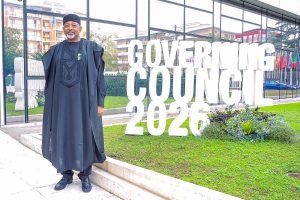
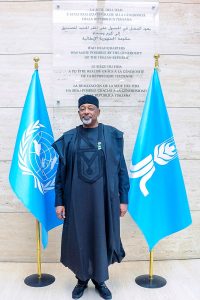
The minister made this known during a bilateral meeting with the Director General of the Food and Agriculture Organization (FAO) of the United Nations, Dr. QU Dongyu, on the sideline of the 2025 World Food Forum (WFF), held in Rome, Italy, recently.
Sen. Kyari stated that the ministry would strengthen collaboration with FAO in expanding irrigation systems to improve water management and resilience for smallholder farmers and enhance year-round agricultural production.
He pointed out the need for strengthening agricultural mechanization initiatives in Nigeria to improve efficiency, productivity, and value addition among rural farming communities.
He noted the importance of FAO’s support in establishing a comprehensive national farmers’ database to aid policy planning, resource allocation, and program monitoring.
The Minister restated the request for FAO’s technical and financial support towards the recharge of the Lake Chad Basin, aimed at restoring agribusiness activities, livelihoods, and food security in the region.
He appealed for increased employment opportunities for qualified Nigerians within FAO Headquarters and its global offices in recognition of the country’s commitment to agricultural transformation and food security.
In his remarks, the Director General, FAO, Dr. QU Dongyu reaffirmed FAO’s commitment towards supporting Nigeria’s agricultural priorities and advancing mutual goals of food security, climate resilience, and rural prosperity.
Ezeaja Ikemefuna
President Bola Ahmed Tinubu has launched the Nigerian Farmers Soil Health Scheme (NFSHS), a progressive national initiative designed to improve crop yields, reduce fertilizer waste through tailored recommendations for soil health and achieve food sovereignty.
Speaking during the launching of the programme at the Banquet Hall of the Presidential Villa, Abuja, recently, the President, represented by the chairman of the Senate Committee on Agriculture, Sen. Saliu, Mustapha said that the NFSHS will promote tailored fertilizer recommendations based on specific crops and soil types, helping farmers achieve higher yields and better incomes.
Tinubu stated that the initiative is tied to the federal government’s broader vision of food sovereignty, which includes ensuring food availability, accessibility and affordability for all citizens
In his welcome address, the Minister of Agriculture and Food Security, Sen. Abubakar Kyari stated that the scheme was a major step in rebuilding the foundation of Nigeria agricultural ecosystem through soil management, digital innovation, and precision.
He pointed out that the President Tinubu’s Administration has already distributed 2.15 million bags of fertilizers, 2,000 tractors and 9,000 implements, alongside expanded cultivation on 500,000 hectares under biosecurity farming initiative, to boost productivity and reduce import dependence
in his remarks and brief view of the NFSHS, the Minister of State for Agriculture and Food Security, Sen. Aliyu Abdullahi said that ‘’ the scheme as a home-grown “renewed hope food security initiative” created to reverse years of declining soil fertility and inefficient fertilizer use.
Sen Abdullahi added that “Farming begins with the soil. It is the silent partner in every harvest. For too long, our soils have given without rest. The NFSHS will help farmers understand their soils, what nutrients they hold, what they lack, and how best to nourish them.”
He explained that the initiative adopts a scientific and data-driven approach to improving soil health through comprehensive testing, digital soil mapping, and site-specific fertilizer recommendations.
He said the scheme directly supports President Tinubu’s vision of national food sovereignty and aligns with Africa’s 2024 Nairobi Declaration on Fertilizer and Soil Health.
Abdullahi outlined key components of the programme, including the establishment of 774 soil testing laboratories across all local government areas, the distribution of personalised ‘soil health’ cards for farmers, and the development of the Nigeria Soil Information System (NiSIS), a central database that will collect and analyses soil data to guide policy and farm-level decisions.
He said the scheme would improve fertilizer efficiency, raise farmer incomes, reduce environmental pollution, and enhance food security nationwide. The project will also generate thousands of jobs for youth and women through the construction and operation of local soil-testing labs.
The minister revealed that the scheme is being implemented through a public-private partnership involving all tiers of government, development partners, and research institutions. Key partners include GIZ, the World Bank’s ACReSAL project, soil values, the International Institute of Tropical Agriculture (IITA), and the Bill & Melinda Gates Foundation.
Abdullahi noted that ‘’the initiative has achieved significant progress, including regional stakeholder workshops, the design of soil health cards, and pilot soil assessments in 11 states across Nigeria’s six geopolitical zones. These efforts, he said, are already showing results’’.
“Farmers who used to harvest 60 to 80 bags of rice per hectare will soon harvest up to 160 bags. Maize and wheat yields will double. This is not just improved farming; it’s national prosperity,” he said.
The minister stressed that soil health is fundamental to agricultural resilience, explaining that healthy soils regulate water, support biodiversity, and act as natural carbon sinks that help mitigate climate change.
He also revealed that the federal government would soon finalize the Nigeria Agricultural Soil Management Policy for Sustainability to consolidate investments and strengthen long-term soil conservation efforts.
According to him, “This scheme is a turning point. When farmers know their soil, they can plan better, grow better, and leave behind healthier land for future generations. When we care for the soil, the soil cares for us.”
In a goodwill message, the National President of the All Farmers Association of Nigeria (AFAN), Arc. Kabir Ibrahim stated that “Nigeria is blessed with vast arable land, Once this scheme is fully implemented, our nation will not only achieve food self-sufficiency but also become the food basket of Africa.”
He called for consistent investment in soil testing and farmer education, noting that understanding soil fertility patterns would save billions spent annually on blanket fertilizer subsidies that often fail to produce the expected results.
In attendance at the launch ceremony were senior government officials, researchers, development partners, and farmer association representatives
The highlight of the occasion was the unveiling of the Nigerian Farmers Soil Health Scheme (NFSHS) programme
The Minister of Agriculture and Food Security, Sen. Abubakar Kyari has said that the climate resilient rainfed wheat varieties would increase production, reduce the cost of Importation, achieve Food and Nutrition Security as well as ensure strong financial returns to Nigerian Farmers.
The Minister made this known during the Second National Rainfed Wheat Farmers’ Field Day held in Kuru, Jos, Plateau State over the weekend.
Kyari stated that ‘’the development and successful cultivation of rainfed wheat in Kuru is nothing short of transformative. It means that wheat production is no longer confined to irrigated zones’’.
He revealed that ‘’ Farmers in the highlands of Jos, Mambila and Obudu in Plateau, Taraba and Cross River States respectively can now grow wheat during the rainy season naturally, sustainably, and profitably.
This innovation opens the door to a future where Nigeria’s wheat demand can be met by our own farmers and grown on our own soil’’.
He added that ‘’this milestone represents more than scientific advancement, it is a bold step toward achieving food and nutrition security for our great nation’’.
The Minister commended the Lake Chad Resea
rch Institute (LCRI) for its groundbreaking achievement in developing these rainfed wheat varieties, a true testament to Nigerian ingenuity and scientific excellence.
He reaffirmed the commitment of President Bola Ahmed Tinubu, GCFR, who has placed agriculture at the very centre of Nigeria’s economic transformation and national security strategy.
According to him, ‘’ the President recognizes that no nation can be truly sovereign unless it can feed itself, employ its youth, and create prosperity from its land. Agriculture has therefore been elevated from a development programme to a presidential priority, driving food security, economic diversification, and inclusive growth’’.
He pointed out that ‘’ the Federal Government is implementing a comprehensive agricultural renewal plan anchored on mechanization, input access, credit expansion, post-harvest management, and strategic partnerships to unlock productivity across value chains’’.
He stated that ‘’through strategic partnerships with development agencies, private-sector investors, and state governments, we are scaling up rainfed wheat cultivation from pilot fields like this into hundreds of thousands of hectares nationwide, ensuring farmers have access to certified seeds, modern mechanization services, and reliable market linkages, making wheat production profitable and sustainable’’.
The Minister outlined the federal Government’s renewed hope agenda in the agricultural sector which included; Renewed Hope Mechanization Initiative, over 2,000 tractors and combined harvesters have been deployed nationwide in the first phase, affordable financing and innovative services for farmers and agribusinesses, the recapitalization of the Bank of Agriculture (BoA) and operationalized the National Agricultural Development Fund (NADF) to ensure sustainable financing for agricultural investments, value-chain infrastructure, innovation, and rural enterprise development, among others.
He appealed to the partners, development agencies, private sector actors, and state governments, ‘’I invite you to join us in scaling up this success. Together, we can build agro-industrial value chains that create jobs, reduce imports, and boost national income and reduce the importing billions of naira worth of wheat annually, to becoming self-sufficient and ultimately, exporters of quality Nigerian wheat’’.
Ezeaja Ikemefuna
In line with President Bola Ahmed Tinubu’s Renewed Hope Agenda, to eradicate poverty, attain Food and Nutrition Security, Economic Growth as well as reduce Postharvest losses, Federal Government has unveiled an ambitious Nigeria Postharvest Systems Transformation Programme (NiPHaST), to ensure a resilient, efficient, and inclusive postharvest handling and storage system that reduces losses, enhance incomes as well as achieve food sovereignty.
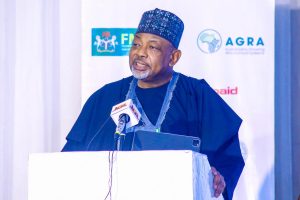
Speaking at the Nigeria Legacy Program, organized by the Africa Food Systems Forum in Partnership with the Alliance for a Green Revolution in Africa (AGRA), in Dakar, Senegal, recently, the Minister of Agriculture and Food Security, Sen. Abubakar Kyari stated that the NiPHaST Program would stabilize food prices, ensure availability, accessibility, affordability of stable food, improve storage system as well as achieve national food sovereignty
The Minister said that the program would focus on household storage technologies, community-level warehouses, cold rooms, and strategic national silos managed through public–private partnerships, among others.
He pointed out it would create robust investment in the storage value chain in terms of processing, preservation, packaging, marketing , climate, smart metal Silos , cold rooms, among others.
He added that the initiative would unlock private sector investment, strengthen market confidence, and expand storage infrastructure.
He noted that it also improves agricultural exports, nutrition, household sales, job opportunities, farmer’s income, and wealth as well as achieved food import substitution in the agricultural ecosystem.
He revealed that Nigeria loses an estimated ₦3.5 trillion annually to postharvest inefficiencies, largely affecting smallholder farmers. “This is not just produce going to waste. It is opportunity lost and livelihoods destroyed,”
Kyari called for stronger international collaboration, stressing that transforming postharvest systems will secure farmer livelihoods, revive agribusiness confidence, and position Nigeria as a leading food supplier in West Africa
In attendance were Jigawa State Governor, Mal. Umar A. Namadi, Minister of Livestock Development, Alhaji Idi Mukhtar Maiha, Senior Special Assistant to the President on Agribusiness, Dr. Kingsley Uzoma, Executive Secretary, National Agricultural Development Fund (NADF), Mohammed Abu Ibrahim, President, Nigeria Agribusiness Group, Arc. Kabir Ibrahim, among others
The Minister of Agriculture and Food Security, Sen. Abubakar Kyari has said that strategic and robust investment in staple crops, namely tomato, cassava, and maize, would unlock productivity, reduce post-harvest losses, strengthen food security, and ensure strong financial returns for investors.
The Minister made this known during his paper presentation titled: Investment Opportunities in Tomato, Maize and Cassava Value Chains at Hand – In – Hand (HiH) Investment Forum, held at Abuja Continental Hotel, Abuja, recently.
Kyari stated that it is not just an investment in agriculture but an investment in food security, economic resilience, and sustainable development across Africa.
He stated that ‘’the tomato investment estimated at $869 million, targets 72,000 hectares in Kano, Bauchi, and Borno. It will halve post-harvest losses, raise yields to as much as 30 tonnes per hectare, and directly benefit 36,000 farmers. The investment is projected to deliver an internal rate of return (IRR) of 12.5% and a net present value (NPV) of $171 million’’.
He pointed out that ‘’ for cassava, Nigeria is seeking $382 million to boost productivity across 207,000 hectares in Ogun, Oyo, and Anambra. The initiative will support 45,000 farmers directly, set up 375 processing units, and reduce import dependence for starch and high-quality flour. The portfolio shows an IRR of 15.2% and NPV of $187.7 million’’.

According to him, ‘’the cases are not only profitable but also scalable and regionally significant. “Investing in these value chains means investing in food security, jobs, and regional trade under ECOWAS and AfCFTA’’.
Kyari further said that in terms of job creation, “Tomato value chain as it is projected. the programme would directly benefit 36,000 farmers and indirectly impact more than 246,000 individuals through job creation and value chain participation.
It will also establish seed multiplication centers for high-quality inputs, clean energy-powered processing plants, including mobile units for rural areas, and stronger national institutions for quality assurance and agricultural research, he added.
He revealed that “investment in the cassava value chain would directly benefit more than 45,000 farmers and indirectly impact over 300,000 individuals through jobs and value chain participation. It will also establish 375 processing units, including mobile facilities, support farmer clusters and cooperatives, and expand access to finance and quality inputs. ”
‘’By addressing national gaps in high-quality cassava flour and starch, this programme will reduce imports, strengthen food security, and supply industries that rely heavily on cassava derivatives’’.
He mentioned that ‘’maize programme will directly benefit more than 420,000 farmers and indirectly impact close to 3 million people. Key interventions include establishing input hubs and one-stop centers for seeds, fertilizers, and extension services; building new processing units for animal feed in poultry and aquaculture; and supporting research institutions for breeder seed development and quality control’’.
The Minister noted that ‘’ for investors, the takeaway is clear: maize is a high-volume, high-demand crop with powerful linkages to Nigeria’s livestock and poultry sectors Investing here strengthens food security, supports industrial growth, and positions Nigeria as a regional hub for animal feed’.
President Bola Ahmed Tinubu has launched a major agricultural mechanization program, distributing 2,000 tractors and over 9,000 specialized farming implements to boost food production and ensure national food security. This initiative aims to empower smallholder farmers with modern equipment, reduce manual labor, and increase yields. The program is part of the Renewed Hope Agricultural Mechanisation Programme, which seeks to transform Nigeria’s agriculture sector and make it a global powerhouse.
“Never in Nigeria’s history have we witnessed an agricultural mechanisation initiative of this scale, ambition, and national focus. We are today unveiling the single largest mechanisation drive ever undertaken in our country,” the minister said.
The initiative is expected to significantly impact Nigeria’s food security and economy. Projected outcomes include the cultivation of over 550,000 hectares of farmland, the production of more than 2 million metric tons of staple food, the creation of over 16,000 jobs, and direct benefits to over 550,000 farming households. The program also includes components such as mandatory operator training, GPS-enabled tracking, and pro bono equipment allocations to research and training institutions.
The partnership between Nigeria and Belarus played a key role in delivering the agricultural machinery, with Belarus providing 2,000 high-quality tractors, 10 combine harvesters, 12 mobile workshops, and 9,000 implements, along with spare parts. The Deputy Prime Minister of Belarus expressed his country’s readiness to move into the next phases of the program, which include establishing service centers, assembly plants, and training programs for Nigerians.
My heart is broken, seeing the graphic visuals of the devastating floods that killed, as at last count, 160 persons—men, women, and children—in Mokwa, Niger State, last Thursday.
This is a most difficult time for the families of the victims, their neighbours, and indeed their communities. My heart goes out to those who have lost their loved ones, along with their properties, including agricultural produce. Infrastructure has also been damaged by the deadly floods. I pray that the Almighty will console the bereaved and lighten their grief. I equally extend my profound sympathy to Governor Mohammed Umar Bago, who, as Chief Executive of Niger State, bears a heavy burden of sifting through the wreckage and stabilizing the traumatized communities.
I am immensely thankful to President Bola Ahmed Tinubu, GCFR, for his fatherly message of commiseration along with his directive to the appropriate agencies to deploy succour to the affected communities. There is evidence that this is being done, and more importantly, there is assurance that those hard-hit by the disaster are the direct recipients of the succour.
Already, I have complemented the state government and the National Emergency Management Agency (NEMA) in providing food items to the hundreds of families impacted by the flash floods.
I must admit that each rainy season in recent years has often left me with a deep sense of foreboding, as water-related disasters gain prominence in the news. Usually, they are boat mishaps in which scores lose their lives, and floods submerge farmlands, leading to significant crop losses and diminished livelihoods.
As I pointed out while appearing yesterday (June 3, 2025) on the TVC Breakfast programme that focused on “Disaster Management: Evaluating Roles of Government and Citizens,” the flash floods in Mokwa last week are urgent reminders yet again of the effects of climate change and why all and sundry must take seriously efforts aimed at mitigation. It is worrisome that Mokwa, which is not on a floodplain, has suffered the horrendous damage from flooding caused by torrential rainfall. This is a natural disaster and of a magnitude never previously witnessed in Mokwa.
There is no gain-saying the fact that, throughout the country, communities and opinion leaders must take more seriously the Seasonal Climate Prediction by NiMET as well as the Annual Flood Outlook released yearly by the Nigeria Hydrological Services Agency. It is also important to speed up the desiltation of existing water bodies while rapidly creating new water-harvesting structures to reduce the flow and damage caused by run-off water but taking advantage of it in agricultural production.
As co-Chairman of the World Bank-financed Agro-Climatic Resilience in Semi-Arid Landscapes (ACReSAL) Project on restoration of degraded land, I can attest to how the project has helped restore arable land in Jigawa State, where desiltation of existing water bodies has created new opportunities for irrigation, farming, and fishing.
Beyond the on-going immediate relief to survivors of the Mokwa flood disaster, there lies a greater challenge of trauma counselling for persons who lost nearly all their family members, as well as the restoration of livelihoods either compromised or wiped out by the deadly floods.
I call on well-meaning citizens and organisations to weigh in with their support and help Mokwa, a critical transit route between the north and south of the country, regaining its vitality.
Senator Dr. Aliyu Sabi Abdullahi, CON
(Baraden Borgu)
Honourable Minister of State for Agriculture and Food Security
4th June, 2025
The Hon. Minister of Agriculture and Food Security, Sen. Abubakar Kyari, CON, stated that Agricultural and blue-economy are inextricably linked- particularly through aquaculture, inland fisheries, irrigated agriculture, wetland management and the livelihoods of coastal to enhance a more food-secured, environmental resilient and economic inclusive country.
The Minister, who was represented by the Permanent Secretary of the Ministry, Dr. Marcus Ogunbiyi revealed this when he received in audience, participants of the Senior Executive Course (SEC), 47, 2025, of the National Institute for Policy and Strategic Studies, NIPSS, Kuru, led by its Director General, Prof. Ayo Omotayo, to his office in Abuja on Wednesday, 30 April 30, 2025.
He pointed out that Nigeria’s vast inland waterways, wetlands and coastal zones present significant opportunities for enhancing food security, improving nutrition, and empowering rural population economically, adding that aquaculture is one of the fastest growing sources of animal protein worldwide.
The Minister noted that, based on this year’s course theme, “Blue Economy and Sustainable Development in Nigeria: Issues, Challenges and Opportunities” is timely and highly relevant to the mandate of the Ministry.
He reiterated the importance of sustainable water resource management in supporting irrigated agriculture and increasing resilience to climate change, stressing that sustainable practices in coastal agriculture could help mitigate environmental degradation, boost productivity and conserve biodiversity.
The Minister added that from the policy perspective, mainstreaming blue economy principles into Nigeria’s agricultural and rural development agenda is essential to realizing the Sustainable Development Goals (SDGs) particularly those related to zero hunger, poverty reduction, economic growth amongst others.
He highlighted the challenges to include pollution, inadequate investment, and climate induced stresses that threaten the full realization of blue economy potentials.
He, therefore, assured that the Federal Ministry of Agriculture and Food Security remains open to innovation, collaboration, and informed dialogue to move the sector forward.
In his remarks, the Director General, NIPSS, Prof Ayo Omotayo commended the Ministry for its laudable programmes and activities and urged Nigerians to change their narratives about “farmers “ to stop looking down on them, pointing out that farmers struggle to bring things out from the ground and don’t even benefit from what they do.
He, therefore, advised everyone to strive to produce part of what they eat in order to value farmers.
Highlight of the event was the Permanent Secretary’s presentation of the National Agricultural Policy Document and questions and answers document to the Visitors.
Eremah Anthonia (Mrs.)
Chief Information Officer
For: Director, Information
30/4/2025
The Hon. Minister of Agriculture and Food Security, Sen. Abubakar kyari, CON, revealed that the federal government is taking proactive steps to introduce zinc rice varieties, Faro 71 and 72, to enhance food and nutrition safety.
The Minister disclosed this while briefing on the official release of Biofortified Zinc Rice Varieties in Nigeria, held in the Ministry’s conference room in Abuja, recently.
He revealed that the Zinc Rice Varieties, Faro 71 and Faro 72 will address key challenges in rice production and significantly contribute to food and nutrition security for Nigeria’s smallholder farmers, who depend on rice for both sustenance and income.
In his words, “these varieties not only offer higher zinc content and yield but also climate resilience such as adaptability to Savanna and Rainforest ecologies, Drought tolerance and Pest and disease resistance, which make them a valuable tool for enhancing both the productivity and resilience of rice farming systems in vulnerable communities”.
The Minister pointed out that Zinc deficiency is a significant public health issue in Nigeria, contributing to poor nutrition outcomes, especially among women and children, adding that Zinc is a vital micronutrient required for immune function, growth, cognitive development, and overall well-being.
“Yet, a large proportion of the Nigerian population does not meet their daily zinc requirements due to diets that are predominantly low in bioavailable micronutrients.
Nutrition surveys and global health reports have it that anaemia affects about 68% of children under five in Nigeria, with zinc and iron deficiencies being major underlying causes. The national stunting prevalence among children under five in Nigeria is 37%, “the Minister noted.
He further stated that proper nutrition was essential for the survival of the human race, as the future of our generation is dependent upon our children.
Sen. Kyari re-emphasized that Zinc deficiency weakens immune systems, increasing the risk of infections, stunted growth, and delayed development in children, pointing out that inadequate dietary intake of zinc contributes to maternal health issues, poor birth outcomes, and reduced work capacity in adults.
He said that to address this, Nigeria is taking proactive steps by introducing biofortified, zinc-enriched staple crops, such as zinc rice, offering affordable, accessible solutions to improve dietary zinc intake and strengthen food and nutrition security.
The Minister noted that through a strategic collaboration between the Ministry and HarvestPlus, HarvestPlus Solutions, and the National Cereals Research Institute (NCRI), Nigeria has achieved a historic milestone with the release of Faro 71 and Faro 72 – the first biofortified, zinc-enriched rice varieties in both Nigeria and Africa.
Kyari pointed out that this remarkable achievement was made possible through the support of the Foreign, Commonwealth & Development Office (FCDO) of the British Government, the Propcom+ Project, and the Alliance for a Green Revolution in Africa (AGRA), whose innovative funding for agricultural development in Nigeria has been instrumental in making the progress a reality.
According to him, “This breakthrough builds on successful scaling efforts in Bangladesh and India, where farming households growing zinc-enriched rice have recorded measurable improvements in nutrition outcomes through increased production and consumption”.
He added that an affordable, accessible dietary source of zinc, these enriched rice varieties can meet up to 40% of daily zinc requirements when consumed regularly, making them a practical and proven solution to combat zinc deficiency and improve cognitive health, especially among adolescents.
The Minister further stated that beyond its nutritional benefits, zinc-enriched rice offers sustainable, innovative market opportunities for smallholder farmers, helping them improve their livelihoods while supplying healthier, nutrient-dense food to Nigerian and African consumers.
He therefore, assured Nigerians that the Federal Ministry of Agriculture and Food Security and Harvest plus will continue to work alongside public institutions, private companies, and national partners to promote the widespread adoption and scaling of the nutri-cereals.
Earlier, the Permanent Secretary in the Ministry, Dr Marcus Ogunbiyi, expressed delight that Nigeria has achieved a remarkable milestone in the agricultural innovation space, emerging as Africa’s first nation to successfully develop zinc biofortified rice.
He noted that rice which is majorly grown and consumed in Nigeria have essential elements like macronutrients embedded in it and being a major staple food in the country the Ministry is concerned about strengthening food and nutrition safety in the county.
In his remarks, Harvestplus Country Director, Dr. Yusuf Dollah said that the organisation is working with National Cereals Research Institute at the moment, and they are producing early generational seeds.
He added that the Institute would be ready to integrate the commercial seed components into the seeds system for free to enable farmers to multiply into the certified seeds that will be required for planting.
Dr Yusuf also pointed out that his organisation intend to work with partners to run demonstrations, demand creation activities amongst others, noting that Harvest plus has three phases namely; Research and Development (which led to the release of the varieties), Commercialisation which the Organisation is about going into and are ready to provide support to ensure that Nigerians will continuously have access to the nutritious varieties and the prices with the other conversational varieties is the same.
In attendance were the Country Representatives of Harvestplus Solutions, Propcom, Biofarm, NCRI, and AGRA, amongst others.
Eremah Anthonia (Mrs.)
Chief Information Officer
For Director Information
29/4/2025