Publications
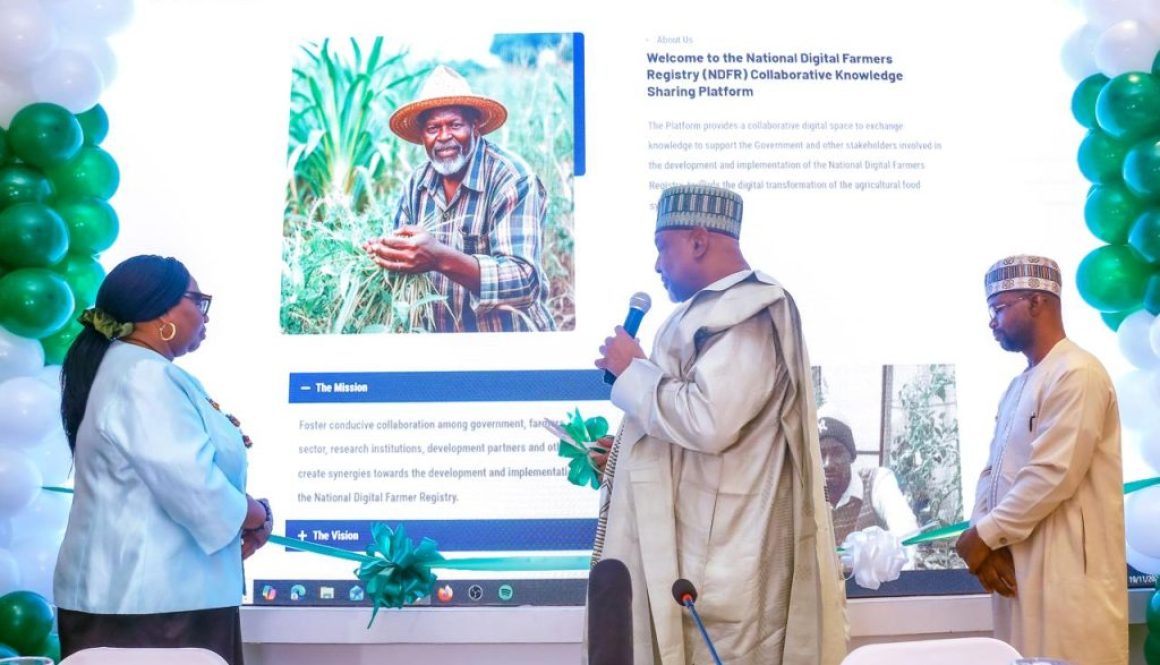
Nigeria Launches National Digital Farmers Registry to Strengthen Food Security
The Federal Government of Nigeria has launched a National Stakeholder Workshop on Best Practices for the National Digital Farmers Registry, marking a major step toward harmonising farmer data and improving agricultural planning. The initiative is implemented under the FG–IFAD Digital Innovation Action Plan. 
Speaking at the event, the Honourable Minister of Agriculture and Food Security, Senator Abubakar Kyari, CON, reaffirmed President Bola Ahmed Tinubu GCFR’s directive to end duplication and inconsistencies in farmer records. He announced that the new registry will be anchored on the National Identification Number (NIN) in
partnership with NIMC, with strong data protection and cybersecurity safeguards developed alongside the Office of the National Security Adviser.
The digital registry will include geo-tagging of farmers and farmlands, enabling transparency, eliminating ghost beneficiaries, and ensuring targeted delivery of inputs, extension services, credit, and insurance. According to the Ministry, the unified platform will also support early warning systems, financial access, digital advisory tools, and climate-smart planning.
The project aligns with the African Union’s CAADP framework and the Kampala Declaration on strengthening digital and data systems for agricultural transformation. A joint IFAD–Heifer International policy dialogue earlier this year underscored the urgent need for Nigeria to harmonise fragmented farmer databases.
Senator Kyari also inaugurated a Multi-Stakeholder Knowledge-Sharing Platform to support ongoing collaboration among government agencies, development partners, private sector stakeholders, academia, and farmers’ organisations.
FG Targets ₦160BN Wheat Production, to Enhance Food Sovereignty
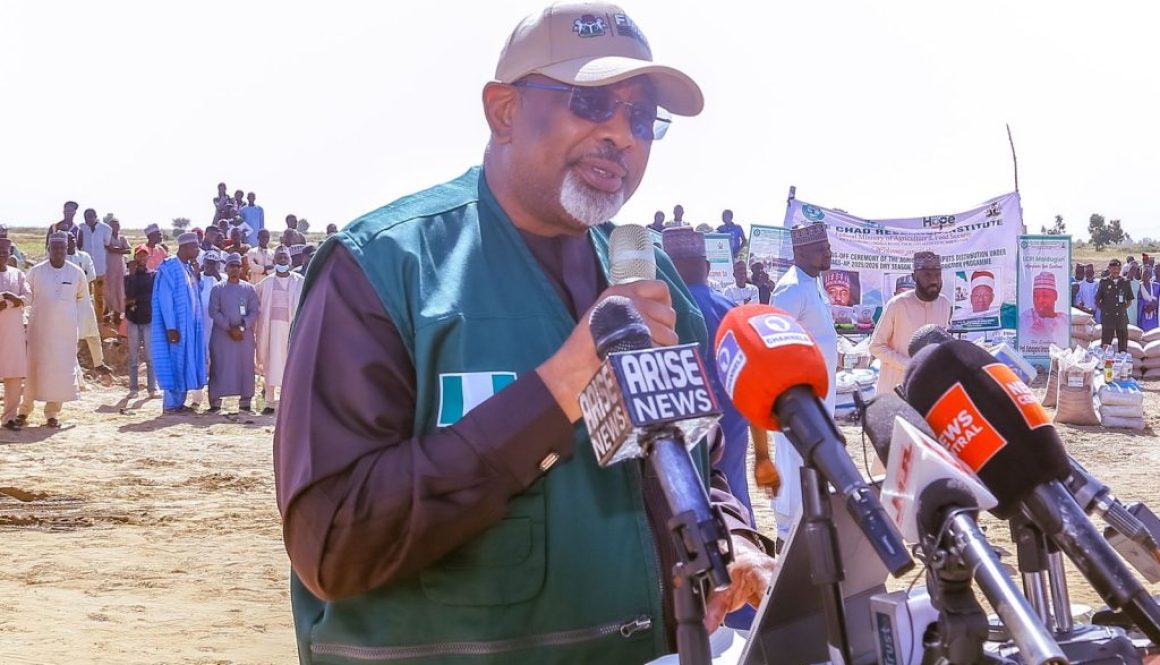
The Minister of Agriculture and Food Security, Sen. Abubakar Kyari has stated that the Federal Government of Nigeria is targeting an output value of approximately N160 billion from wheat production for the 2025/2026 dry season as part of its efforts to enhance food sovereignty and reduce dependence on imports.
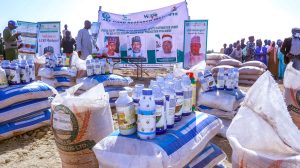
The Minister made this known during the flag-off of the Subsidized Agricultural inputs Distribution of 2025/2026 dry season wheat production programme under the National Agricultural Growth and Agro Pocket Project (NAGS-AP) held in Jere Local Government Area, Borno State, on Saturday, 15th November, 2025.
Sen. Kyari revealed that the Ministry, through the NAGS-AP Programme, has earmarked 40,000 hectares of land for 2025/2026 dry season wheat production and registered 80,000 farmers, with an expected output value of approximately ₦160 billion.
He said that out of the 40,000 hectares earmarked for wheat production this dry season, 3,000 hectares have been allocated to Borno State, with 6,000 registered wheat farmers.
The Minister recalled “Under the 2023/2024 dry season wheat production programme, a total of 107,429 registered farmers were supported with critical subsidised inputs, resulting in an output valued at ₦474,628,000 billion. During the 2024/2025 dry season, 279,297 registered farmers received support, with an output valued at ₦893,750,004 billion.
He noted that “for the current 2025/2026 season, the programme is targeting 80,000 registered farmers with an expected output value of approximately ₦160 billion.
He stated that the NAGS-AP programme would deploy Agricultural Extension Agents to guide farmers on modern agronomic practices and provide continuous field-level advisory services.
He added that “Fertiliser and Seed Quality Control Officers will be mobilised to ensure that all inputs delivered to farmers meet the required standards, thereby guaranteeing higher productivity and improved yields,”.
According to him, “the wheat component of the NAGSAP programme covers sixteen states of the federation”
“These are Adamawa, Bauchi, Borno, Cross River, Gombe, Kaduna, Kano, Kebbi, Niger, Plateau, Sokoto, Taraba, Yobe, and Zamfara. The inclusion of Cross River last year expanded wheat production into the southern region for the first time and strengthened our national capacity to diversify production across ecological zones,”
Kyari pointed out that the project is designed to include women and young people, enabling them to access training and agricultural opportunities.
“NAGS- AP is deliberately designed to leave no one behind. The programme ensures that farmers across communities—including women and young people, who play vital roles in our agricultural workforce—have equitable access to inputs, training, and opportunities”.
“The success of any agricultural season depends on the quality of inputs that reach our farmers. Without certified seeds, accurate fertiliser blends, and timely access to crop protection products, no level of effort in the field can deliver the yields we require as a nation”.
The Minister stressed that ” This is why NAGS- AP places strong emphasis on input quality, traceability, and transparent delivery systems, ensuring that every farmer receives the right inputs at the right time to achieve higher productivity and better returns,”.
In his remark, the Governor of Borno State, Prof. Babagana Zulum appreciated the federal government for its continuous support towards irrigation development.
He stated that “Mr. President’s commitment to food security and national productivity provides the foundation upon which programmes like this are built,”.
He noted that ” Borno State, with its vast arable and irrigable land—especially within the Lake Chad Basin—remains one of Nigeria’s most promising agricultural frontier.”.
He said that “Today is more than a ceremony; it is a celebration of hope, resilience, and our unwavering commitment to ensuring that no family in Borno State goes hungry and no farmer is left behind. Despite the challenges of displacement, insecurity, and climate shocks, Borno State remains steadfast in growing its own food and empowering its people.”
The governor reaffirmed his administration’s commitment to sustaining all-season farming through the provision of essential infrastructure, logistics, modern machinery, improved seeds, fertilisers, agrochemicals, and other inputs required to boost productivity and support farmers across the state.
He further stated: “Borno State has achieved remarkable milestones under our people-centred agricultural vision. Our input support programmes have reached tens of thousands of smallholder farmers, resettled households, women, and youth, providing improved seeds, agrochemicals, and agronomic guidance.”
Responding on behalf of the smallholder farmers, Alhaji Haruna Umaru pledged that the farmers would ensure an increase in production in line with President Bola Ahmed Tinubu’s Renewed Hope Agenda in the Agricultural sector.
The Highlight was the distribution of Subsidized Agricultural Inputs to smallholder farmers
Ezeaja Ikemefuna
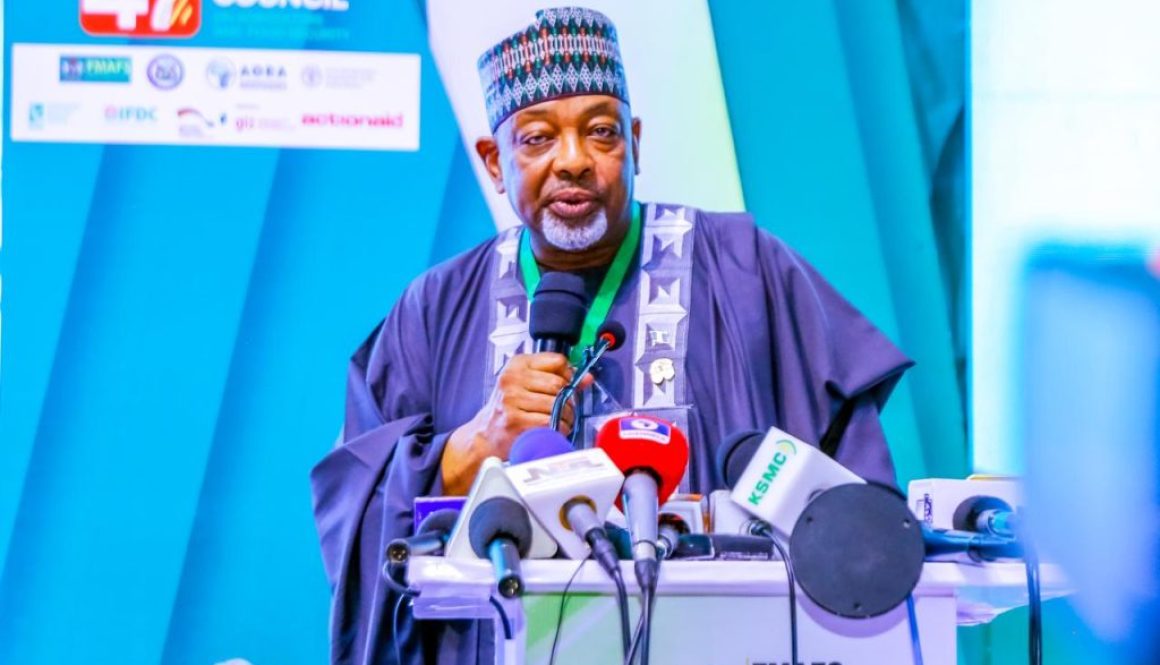
2025 NCA: FG Says Decline in Food Prices A Reflection of Targeted Market Interventions
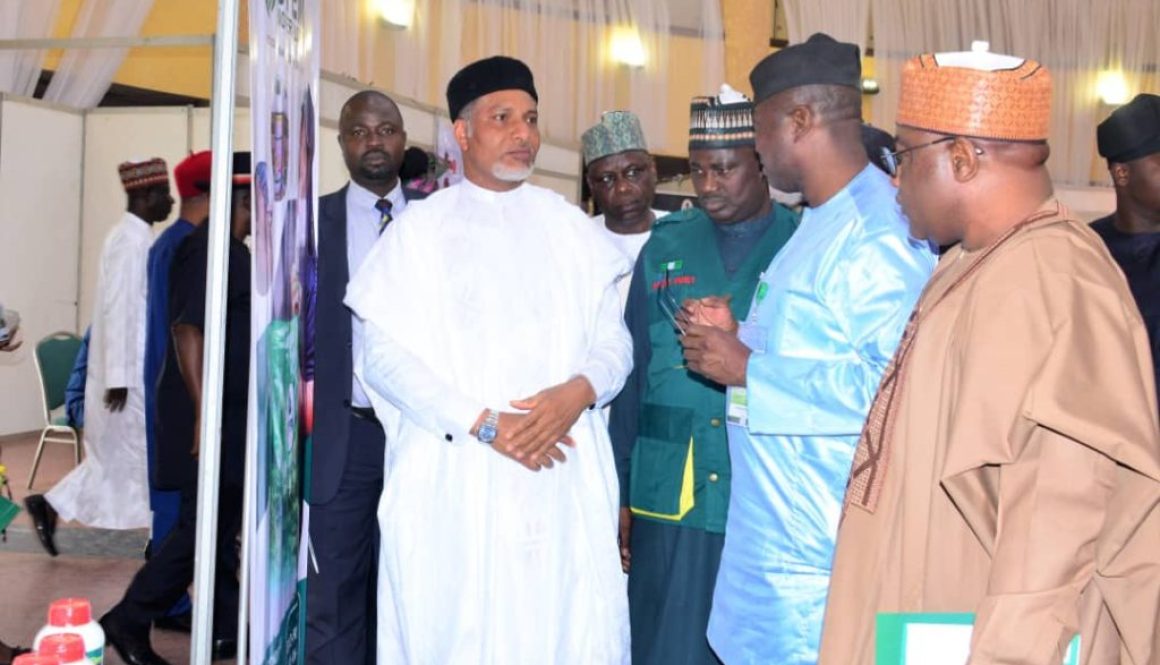
Tinubu Launches Nigerian Farmers Soil Health Scheme to Enhance Yields, Cut Fertilizer Waste.
President Bola Ahmed Tinubu has launched the Nigerian Farmers Soil Health Scheme (NFSHS), a progressive national initiative designed to improve crop yields, reduce fertilizer waste through tailored recommendations for soil health and achieve food sovereignty.
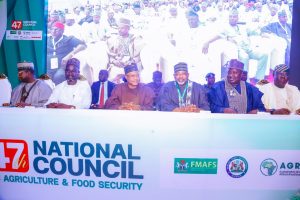
Speaking during the launching of the programme at the Banquet Hall of the Presidential Villa, Abuja, recently, the President, represented by the chairman of the Senate Committee on Agriculture, Sen. Saliu, Mustapha said that the NFSHS will promote tailored fertilizer recommendations based on specific crops and soil types, helping farmers achieve higher yields and better incomes.
Tinubu stated that the initiative is tied to the federal government’s broader vision of food sovereignty, which includes ensuring food availability, accessibility and affordability for all citizens
In his welcome address, the Minister of Agriculture and Food Security, Sen. Abubakar Kyari stated that the scheme was a major step in rebuilding the foundation of Nigeria agricultural ecosystem through soil management, digital innovation, and precision.
He pointed out that the President Tinubu’s Administration has already distributed 2.15 million bags of fertilizers, 2,000 tractors and 9,000 implements, alongside expanded cultivation on 500,000 hectares under biosecurity farming initiative, to boost productivity and reduce import dependence
in his remarks and brief view of the NFSHS, the Minister of State for Agriculture and Food Security, Sen. Aliyu Abdullahi said that ‘’ the scheme as a home-grown “renewed hope food security initiative” created to reverse years of declining soil fertility and inefficient fertilizer use.
Sen Abdullahi added that “Farming begins with the soil. It is the silent partner in every harvest. For too long, our soils have given without rest. The NFSHS will help farmers understand their soils, what nutrients they hold, what they lack, and how best to nourish them.”
He explained that the initiative adopts a scientific and data-driven approach to improving soil health through comprehensive testing, digital soil mapping, and site-specific fertilizer recommendations.
He said the scheme directly supports President Tinubu’s vision of national food sovereignty and aligns with Africa’s 2024 Nairobi Declaration on Fertilizer and Soil Health.
Abdullahi outlined key components of the programme, including the establishment of 774 soil testing laboratories across all local government areas, the distribution of personalised ‘soil health’ cards for farmers, and the development of the Nigeria Soil Information System (NiSIS), a central database that will collect and analyses soil data to guide policy and farm-level decisions.
He said the scheme would improve fertilizer efficiency, raise farmer incomes, reduce environmental pollution, and enhance food security nationwide. The project will also generate thousands of jobs for youth and women through the construction and operation of local soil-testing labs.
The minister revealed that the scheme is being implemented through a public-private partnership involving all tiers of government, development partners, and research institutions. Key partners include GIZ, the World Bank’s ACReSAL project, soil values, the International Institute of Tropical Agriculture (IITA), and the Bill & Melinda Gates Foundation.
Abdullahi noted that ‘’the initiative has achieved significant progress, including regional stakeholder workshops, the design of soil health cards, and pilot soil assessments in 11 states across Nigeria’s six geopolitical zones. These efforts, he said, are already showing results’’.
“Farmers who used to harvest 60 to 80 bags of rice per hectare will soon harvest up to 160 bags. Maize and wheat yields will double. This is not just improved farming; it’s national prosperity,” he said.
The minister stressed that soil health is fundamental to agricultural resilience, explaining that healthy soils regulate water, support biodiversity, and act as natural carbon sinks that help mitigate climate change.
He also revealed that the federal government would soon finalize the Nigeria Agricultural Soil Management Policy for Sustainability to consolidate investments and strengthen long-term soil conservation efforts.
According to him, “This scheme is a turning point. When farmers know their soil, they can plan better, grow better, and leave behind healthier land for future generations. When we care for the soil, the soil cares for us.”
In a goodwill message, the National President of the All Farmers Association of Nigeria (AFAN), Arc. Kabir Ibrahim stated that “Nigeria is blessed with vast arable land, Once this scheme is fully implemented, our nation will not only achieve food self-sufficiency but also become the food basket of Africa.”
He called for consistent investment in soil testing and farmer education, noting that understanding soil fertility patterns would save billions spent annually on blanket fertilizer subsidies that often fail to produce the expected results.
In attendance at the launch ceremony were senior government officials, researchers, development partners, and farmer association representatives
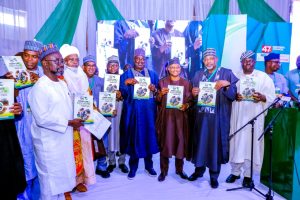
The highlight of the occasion was the unveiling of the Nigerian Farmers Soil Health Scheme (NFSHS) programme
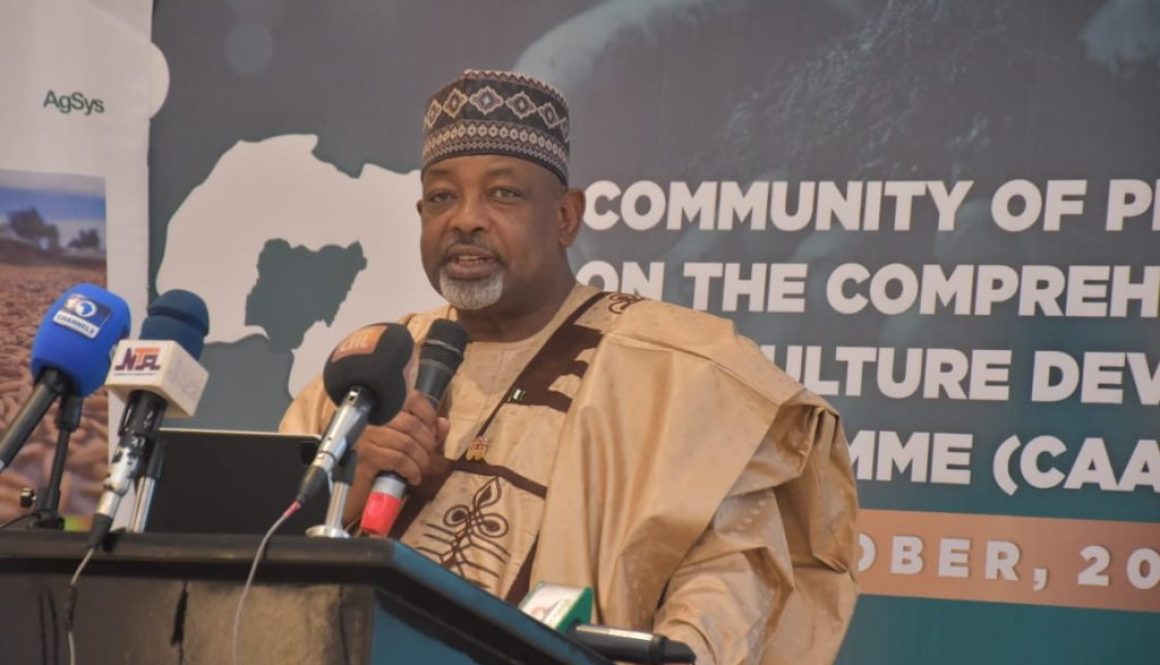
Nigeria Domesticates CAADP Kampala Declaration
Nigeria is focusing on implementing the CAADP Kampala Declaration (2026-2036) to drive significant advancements in agriculture and food security. Minister of Agriculture and Food Security, Senator Abubakar Kyari, highlighted key objectives during the Community of Practice Summit on CAADP in Abuja, themed “From Kampala to Abuja: Transforming Agrifood Systems in Nigeria.” These objectives include intensifying sustainable food production, promoting agro-industrialization, reducing post-harvest losses, and boosting intra-African trade in agriculture. The aim is to make Nigeria’s food systems more productive, resilient, inclusive, and sustainable.
Senator Kyari outlined several Federal Government initiatives underway, such as providing 2,000 tractors and establishing Special Agro-industrial Zones (SAPZ) in states like Kaduna, Cross Rivers, and Ogun, with investments totaling $538.05 million and expected to stimulate $1 billion by 2027. The Nigeria Postharvest Systems Transformation Program (NiPHaST) aims to address #3.5 trillion annual postharvest inefficiencies, strengthen value chains, and enhance food sovereignty. An Agricultural Sector Working Group involving research institutions, private and public sectors, NGOs, and civil society has been set up for governance, best practice scaling, progress monitoring, and accountability. The Minister stressed that collaboration between federal and state governments is vital for achieving food security and transformation as envisioned by the Kampala Declaration.
The Minister appealed to Commissioners for Agriculture, Livestock, Fisheries, and Rural Development, “you hold a crucial role in shaping the direction and impact of our agricultural policies and programs at the sub-regional level. Our challenges require not only innovative solutions but also coordinated action and unwavering commitment at every level of government”.
Key stakeholders emphasized the transformative impact of CAADP implementation in Nigeria and Africa, providing a strategic framework aligning national policies with continental priorities. Dr. Marcus Ogunbiyi, Permanent Secretary in the Ministry, noted CAADP’s positive outcomes. Dr. Karen Yansen of German Cooperation highlighted the Kampala Declaration’s focus on evidence-based governance, integrated monitoring, inclusivity, and equity. Minister Kyari appealed to state commissioners for coordinated action, innovative solutions, and alignment with CAADP and national priorities, assuring federal government support for collaborative efforts to build robust, equitable, and sustainable food systems across Nigeria’s sub-regions.
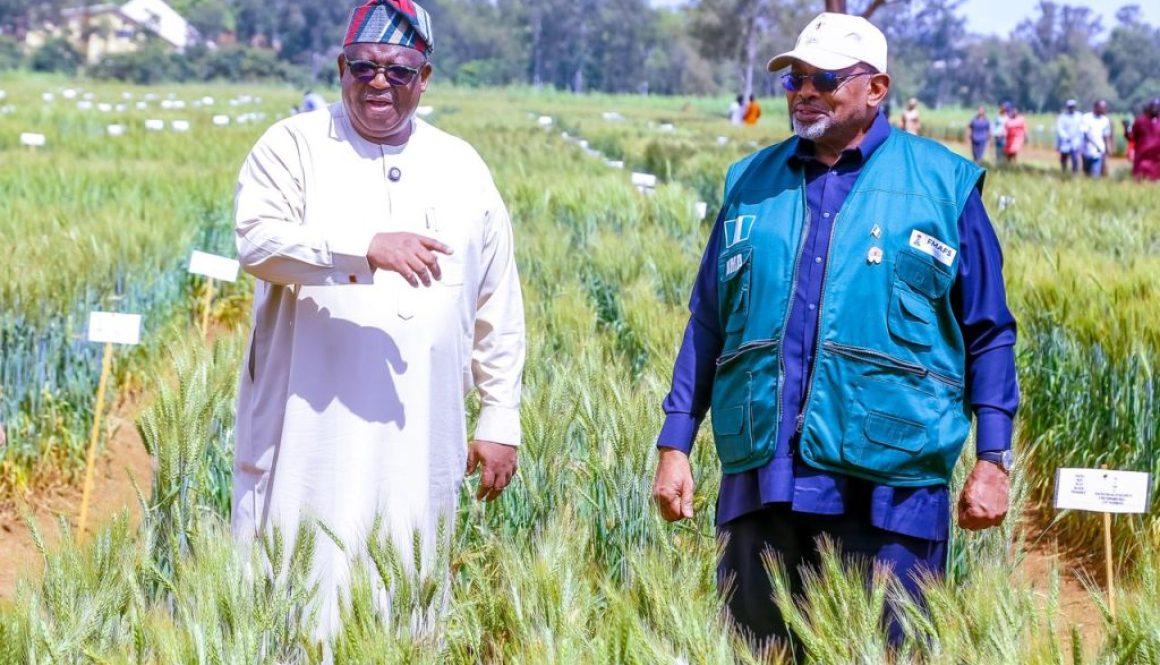
Rainfed Wheat Varieties Will Increase Production and Reduce Cost of Importation – Agric Minister
The Minister of Agriculture and Food Security, Sen. Abubakar Kyari has said that the climate resilient rainfed wheat varieties would increase production, reduce the cost of Importation, achieve Food and Nutrition Security as well as ensure strong financial returns to Nigerian Farmers.
The Minister made this known during the Second National Rainfed Wheat Farmers’ Field Day held in Kuru, Jos, Plateau State over the weekend.
Kyari stated that ‘’the development and successful cultivation of rainfed wheat in Kuru is nothing short of transformative. It means that wheat production is no longer confined to irrigated zones’’.
He revealed that ‘’ Farmers in the highlands of Jos, Mambila and Obudu in Plateau, Taraba and Cross River States respectively can now grow wheat during the rainy season naturally, sustainably, and profitably.
This innovation opens the door to a future where Nigeria’s wheat demand can be met by our own farmers and grown on our own soil’’.
He added that ‘’this milestone represents more than scientific advancement, it is a bold step toward achieving food and nutrition security for our great nation’’.
The Minister commended the Lake Chad Resea rch Institute (LCRI) for its groundbreaking achievement in developing these rainfed wheat varieties, a true testament to Nigerian ingenuity and scientific excellence.
He reaffirmed the commitment of President Bola Ahmed Tinubu, GCFR, who has placed agriculture at the very centre of Nigeria’s economic transformation and national security strategy.
According to him, ‘’ the President recognizes that no nation can be truly sovereign unless it can feed itself, employ its youth, and create prosperity from its land. Agriculture has therefore been elevated from a development programme to a presidential priority, driving food security, economic diversification, and inclusive growth’’.
He pointed out that ‘’ the Federal Government is implementing a comprehensive agricultural renewal plan anchored on mechanization, input access, credit expansion, post-harvest management, and strategic partnerships to unlock productivity across value chains’’.
He stated that ‘’through strategic partnerships with development agencies, private-sector investors, and state governments, we are scaling up rainfed wheat cultivation from pilot fields like this into hundreds of thousands of hectares nationwide, ensuring farmers have access to certified seeds, modern mechanization services, and reliable market linkages, making wheat production profitable and sustainable’’.
The Minister outlined the federal Government’s renewed hope agenda in the agricultural sector which included; Renewed Hope Mechanization Initiative, over 2,000 tractors and combined harvesters have been deployed nationwide in the first phase, affordable financing and innovative services for farmers and agribusinesses, the recapitalization of the Bank of Agriculture (BoA) and operationalized the National Agricultural Development Fund (NADF) to ensure sustainable financing for agricultural investments, value-chain infrastructure, innovation, and rural enterprise development, among others.
He appealed to the partners, development agencies, private sector actors, and state governments, ‘’I invite you to join us in scaling up this success. Together, we can build agro-industrial value chains that create jobs, reduce imports, and boost national income and reduce the importing billions of naira worth of wheat annually, to becoming self-sufficient and ultimately, exporters of quality Nigerian wheat’’.
Ezeaja Ikemefuna
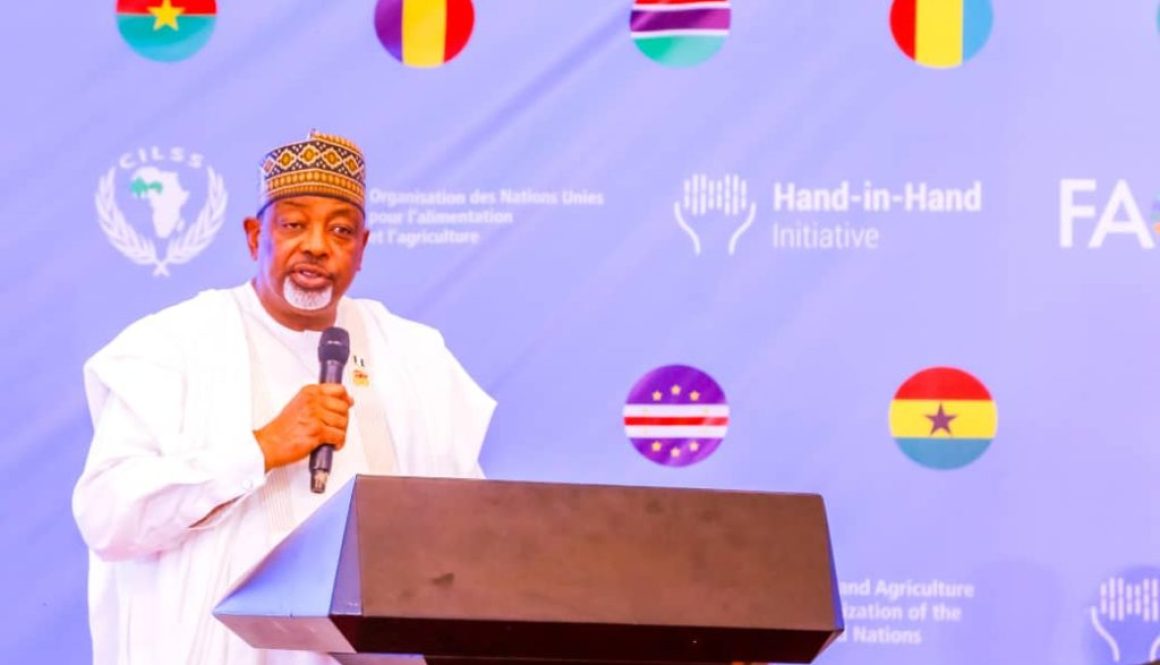
Strategic and Strong Investment in Staple Crops will Decrease Post-Harvest Losses – Agric Minister.
The Minister of Agriculture and Food Security, Sen. Abubakar Kyari has said that strategic and robust investment in staple crops, namely tomato, cassava, and maize, would unlock productivity, reduce post-harvest losses, strengthen food security, and ensure strong financial returns for investors.
The Minister made this known during his paper presentation titled: Investment Opportunities in Tomato, Maize and Cassava Value Chains at Hand – In – Hand (HiH) Investment Forum, held at Abuja Continental Hotel, Abuja, recently.
Kyari stated that it is not just an investment in agriculture but an investment in food security, economic resilience, and sustainable development across Africa.
He stated that ‘’the tomato investment estimated at $869 million, targets 72,000 hectares in Kano, Bauchi, and Borno. It will halve post-harvest losses, raise yields to as much as 30 tonnes per hectare, and directly benefit 36,000 farmers. The investment is projected to deliver an internal rate of return (IRR) of 12.5% and a net present value (NPV) of $171 million’’.
He pointed out that ‘’ for cassava, Nigeria is seeking $382 million to boost productivity across 207,000 hectares in Ogun, Oyo, and Anambra. The initiative will support 45,000 farmers directly, set up 375 processing units, and reduce import dependence for starch and high-quality flour. The portfolio shows an IRR of 15.2% and NPV of $187.7 million’’.
 The Minister added that ‘’the largest share goes to maize, with a planned investment of $1 billion across 1 million hectares in Katsina, Kaduna, and Oyo. Designed to close Nigeria’s 5 million metric tonne production gap, the programme will benefit over 420,000 farmers’ directly and nearly 3 million people indirectly. The financial outlook indicates an IRR of 18.7% and NPV of $75.6 million’’
According to him, ‘’the cases are not only profitable but also scalable and regionally significant. “Investing in these value chains means investing in food security, jobs, and regional trade under ECOWAS and AfCFTA’’.
Kyari further said that in terms of job creation, “Tomato value chain as it is projected. the programme would directly benefit 36,000 farmers and indirectly impact more than 246,000 individuals through job creation and value chain participation.
It will also establish seed multiplication centers for high-quality inputs, clean energy-powered processing plants, including mobile units for rural areas, and stronger national institutions for quality assurance and agricultural research, he added.
He revealed that “investment in the cassava value chain would directly benefit more than 45,000 farmers and indirectly impact over 300,000 individuals through jobs and value chain participation. It will also establish 375 processing units, including mobile facilities, support farmer clusters and cooperatives, and expand access to finance and quality inputs. ”
‘’By addressing national gaps in high-quality cassava flour and starch, this programme will reduce imports, strengthen food security, and supply industries that rely heavily on cassava derivatives’’.
He mentioned that ‘’maize programme will directly benefit more than 420,000 farmers and indirectly impact close to 3 million people. Key interventions include establishing input hubs and one-stop centers for seeds, fertilizers, and extension services; building new processing units for animal feed in poultry and aquaculture; and supporting research institutions for breeder seed development and quality control’’.
The Minister noted that ‘’ for investors, the takeaway is clear: maize is a high-volume, high-demand crop with powerful linkages to Nigeria’s livestock and poultry sectors Investing here strengthens food security, supports industrial growth, and positions Nigeria as a regional hub for animal feed’.