The Attention of the Federal Ministry of Agriculture and Food Security has been drawn to a POULTRY FARMER SUPPORT PROGRAM allegedly from the Ministry.
This is to notify the General Public that the Ministry did not issue any POULTRY FARMER SUPPORT PROGRAM as being currently circulated. It is a SCAM and should be disregarded.
In line with the Policy of the Ministry, any such Programme will always be made Public on National Dailies, Ministry’s Website and other Social Media Platforms.
Mr. Ezeaja Ikemefuna
Head, Information Unit
For: Permanent Secretary
I join Nigerians and the global community to commemorate World Food Day 2026, themed “Innovate Today. Nourish Tomorrow.”
This theme captures the fundamental reality that tomorrow’s food security will be determined by today’s innovations.
On this occasion, I restate the Federal Government’s unwavering commitment to ensuring food security for all Nigerians.
Under the Renewed Hope Agenda of His Excellency, President Bola Ahmed Tinubu, GCFR, we are implementing a comprehensive approach to transform Nigeria’s agricultural sector into a productive, resilient, competitive and investment-driven sector capable of feeding our population and contributing substantially to economic growth.
Our approach is anchored on producing more food, reducing food losses, strengthening agricultural value chains and enabling farmers to produce profitably, through interventions across the entire value chain from research and inputs to storage, processing, financing, marketing and consumption, in collaboration with State Governments, farmers’ organizations, development partners, research institutions, financial institutions and the private sector.
I am pleased to report that our reforms are yielding results. According to the National Bureau of Statistics (NBS), agriculture is back on a strong growth trajectory for the first time since 2021, with the sector recording 4.39% overall growth in the second quarter of 2026 and crop production expanding by 3.66%.
This growth is evidence that our reforms and investments are making impact.
Through the National Agricultural Growth Scheme and Agro-Pocket (NAGS-AP), in just four farming seasons, we have supported smallholder farmers to produce 2.5 million metric tonnes of staple foods.
Nigeria’s annual domestic wheat production has also risen to approximately 420,000 metric tonnes, representing a 3.5-fold increase from the previous baseline of 120,000 metric tonnes.
We have moved from rhetoric to action on mechanization with the commissioning of the Renewed Hope Agricultural Mechanization Programme with 2,000 tractors and implements, to make farming more efficient, less labour-intensive and attractive to our youth.
Other interventions include the commencement of soil mapping under the National Soil Health and Fertility Programme, promotion of bio-fortified crops, and revitalization of extension services with newly trained frontline agents and digital e-extension platforms linked to the National Farmers Registry harmonized with NIN.
Government is decisively tackling high prices at the source through aggressive dry-season farming, investments in Special Agro-Industrial Processing Zones (SAPZs), storage and cold-chain facilities to cut post-harvest losses from 40% to under 20%, combined with orderly release from the Strategic Food Reserve and a Guaranteed Minimum Price.
We are also promoting climate-smart agriculture, expanding irrigation, repositioning the Bank of Agriculture for affordable financing, and strengthening agricultural insurance and pest surveillance.
Furthermore, the implementation of the National Cooperative Identity Reform under the Renewed Hope Cooperative Reform and Revamp Programme (RH-CRRP 2030) will transform Nigeria’s cooperative ecosystem into a credible, transparent and bankable economic bloc. The Programme, unanimously approved by the 8th National Council on Cooperative Affairs in March 2026, provides a seven-pillar reform framework covering legal and regulatory reform, digitalization and data management, cooperative finance, capacity building, enterprise growth, socio-economic inclusion and strategic partnerships.
While we acknowledge insecurity in some major food-producing belts in Northern Nigeria, Government is addressing it through deployment more personnel security of Army, Civil Defense, Agro-rangers, to protect farmlands and enhanced collaboration between security agencies and farming communities.
Food security is a collective responsibility and I appreciate the Food and Agriculture Organization (FAO) and other partners for their continued support.
We remain resolute in building a sector capable of feeding the nation and driving economic growth.
Sen. Dr. Aliyu Sabi Abdullahi, CON
Honourable Minister of State for Agriculture and Food Security
16th October, 2026
The Federal Government has restated its commitment to ensuring food security for all Nigerians as the agricultural sector records 4.39% overall growth.
In a statement to commemorate the 2026 World Food Day themed “Innovate Today. Nourish Tomorrow,” the Honourable Minister of State for Agriculture and Food Security, Sen. Dr. Aliyu Sabi Abdullahi, CON, said the theme captures the fundamental reality that tomorrow’s food security will be determined by today’s innovations.
The Minister noted that the Ministry, under their strategic leadership, is implementing a comprehensive approach to transform Nigeria’s agricultural sector into a productive, resilient, competitive and investment-driven sector capable of feeding the population and contributing substantially to economic growth.
He added that the approach is anchored on ensuring Nigeria produces more food, reduces food losses, strengthens agricultural value chains and enables farmers to produce profitably, through interventions across the entire value chain from research and inputs to storage, processing, financing, marketing and consumption, in collaboration with State Governments, farmers’ organizations, development partners, research institutions, financial institutions and the private sector.
Citing data from the National Bureau of Statistics (NBS), the Minister disclosed that agriculture is back on a strong growth trajectory for the first time since 2021, with the sector recording 4.39% overall growth in the second quarter of 2026 and crop production expanding by 3.66%.
He described the growth as evidence that reforms and investments under the Renewed Hope Agenda of President Bola Ahmed Tinubu, GCFR, are yielding impact.
Providing further evidence of progress, the Minister announced that Nigeria’s annual domestic wheat production has risen to approximately 420,000 metric tonnes, representing a 3.5-fold increase from the previous baseline of 120,000 metric tonnes, driven by the National Agricultural Growth Scheme and Agro-Pocket (NAGS-AP).
He stated further that through NAGS-AP, in just four farming seasons, the Ministry has supported smallholder farmers to produce 2.5 million metric tonnes of staple foods.
Sen. Abdullahi highlighted that the Ministry has moved from rhetoric to action on mechanization with the commissioning of the Renewed Hope Agricultural Mechanization Programme with 2,000 tractors and implements, to make farming more efficient, less labour-intensive and attractive to youth.
He listed other interventions to include commencement of soil mapping under the National Soil Health and Fertility Programme, promotion of bio-fortified crops, revitalization of extension services with newly trained frontline agents and digital e-extension platforms linked to the National Farmers Registry harmonized with NIN.
The Minister said that Government is decisively tackling high prices at the source through aggressive dry-season farming, investments in Special Agro-Industrial Processing Zones (SAPZs), storage and cold-chain facilities to cut post-harvest losses from 40% to under 20%, combined with orderly release from the Strategic Food Reserve and a Guaranteed Minimum Price.
He noted that Government is promoting climate-smart agriculture, expanding irrigation, repositioning the Bank of Agriculture for affordable financing, and strengthening agricultural insurance and pest surveillance.
He further revealed that the implementation of the National Cooperative Identity Reform under the Renewed Hope Cooperative Reform and Revamp Programme (RH-CRRP 2030) would transform Nigeria’s cooperative ecosystem into a credible, transparent and bankable economic bloc.
He explained that the RH-CRRP 2030, unanimously approved by the 8th National Council on Cooperative Affairs in March 2026, provides a seven-pillar reform framework covering legal and regulatory reform, digitalization and data management, cooperative finance, capacity building, enterprise growth, socio-economic inclusion and strategic partnerships.
While acknowledging insecurity in some major food-producing belts in Northern Nigeria, he said Government is addressing it through deployment of agro-rangers to protect farmlands and enhanced collaboration between security agencies and farming communities.
Sen. Abdullahi stressed that food security is a collective responsibility and appreciated the Food and Agriculture Organization (FAO) and other partners for their support.
He reaffirmed the Ministry’s resolve to build a sector capable of feeding the nation and driving economic growth.
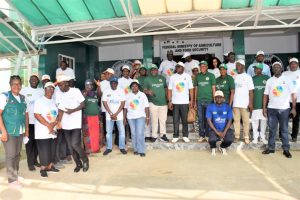
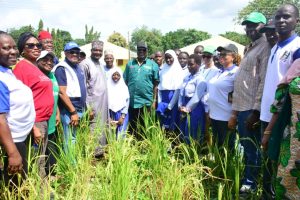
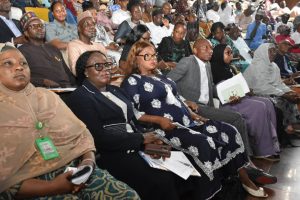
Speaking during the Walk and Sensitization Rally to Mark the Event, the Permanent Secretary in the Ministry, Dr. Marcus Olaniyi Ogunbiyi stated: “the significance of World Food Day lies in its call for action. It challenges us to look beyond the food on our tables and consider the farmers who produce it, the resources required to grow it, the systems that preserve and distribute it, and the millions of people who still struggle to afford a healthy meal.
Dr. Ogunbiyi added that ‘’It is also an opportunity to celebrate the contribution of farmers and other actors across the food value chain, recognise progress made, confront existing challenges and renew our determination to end hunger’’.
He pointed out that ‘’it is against this background that this year’s theme, Innovate Today. Nourish Tomorrow, assumes particular importance. It reminds us that the future of food security depends on the decisions and investments we make today. Innovation must extend beyond modern machinery and digital technology to include improved seeds, better farming practices, efficient irrigation, sustainable soil management, effective storage, food processing, improved transportation and the reduction of post-harvest losses. It must also involve practical solutions that enable smallholder farmers, women and young people to participate meaningfully in agricultural development’’.
In his remarks, the country representative for Nigeria and ECOWAS, Food and Agriculture Organization of the United Nations, Dr. Hussein Gadain, represented by the FAO Programme Officer, Jimmy Owani stated that the central message of World Food Day 2026 is that innovation delivers its greatest impact when it reaches the people who need it most, the benefits of innovation must not remain confined to laboratories, research institutions or policy discussions. They must reach farmers’ fields, fishing communities, pastoral systems, rural enterprises and households across Nigeria’’.
Dr. Gadain Further said that ‘’ by investing in people, fostering innovation and strengthening partnerships, we can build resilient agrifood systems, end hunger, improve nutrition and ensure that no Nigerian is left behind’’.
During his Goodwill Message, the national president Coalition of Farmers Associations for Food Security in Nigeria (COA-FARMERS), Chief Emmanuel Anoh lauded the agricultural transformation, which is geared toward achieving food and nutrition security, boosting economic growth, and improving the livelihoods of Nigerian farmers
The Federal Ministry of Agriculture and Food Security (FMAFS), in Collaboration with the Food and Agriculture Organization (FAO) of the United Nations, and other Stakeholders wishes to announce the following programmes in commemoration of the 2026 World Food Day with the
Theme: ‘’Innovate Today, Nourish Tomorrow’’
Activities earmarked to commemorate the Day are as follows:
Day 1 – Thursday 15th October, 2026
Visit to Cluster Farms/Selected Secondary School farmers and Internally Displaced Persons (IDPs) within the FCT
Mechanization Clinic
Take Off Point: Federal Ministry of Agriculture and Food Security (FMAFS), Complex, Area 11 Garki, Abuja
Time: 9: 00 am
Day 2 – Friday 16th October, 2026
Sensitization Walk in FCT
Take Off Point: Federal Ministry of Agriculture and Food Security (FMAFS), Complex, Area 11 Garki, Abuja
Time: 7:00 am
Venue: Millennium Park, Central Business Area, Abuja
Ministerial Press Briefing
Time: 2:00 pm
Venue: Hon. Minister’s Conference Room, FMAFS Complex, Area 11 Garki, Abuja
This year’s edition marks the 81st Anniversary of FAO’s founding and the 46th observance of the celebration in Nigeria
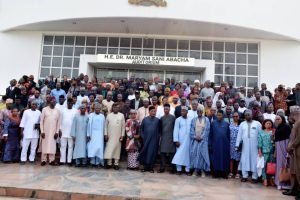
The Permanent Secretary, Federal Ministry of Agriculture and Food Security, Dr. Marcus Olaniyi Ogunbiyi, on Monday, 13th October 2026, held an inaugural Town Hall Meeting with Directors and staff of the Ministry.The meeting, which took place at the H.E. Dr. Maryam Sani Abacha Auditorium, Maryam Babangida National Centre for Women Development, Abuja, provided a platform for interactive engagement on staff welfare, productivity and ongoing reforms in the Ministry.
Nigeria is set to make history as it hosts the 5th Global High-Level Ministerial Conference on Antimicrobial Resistance (AMR) in Abuja, the first time the global gathering will be held on African soil.
The conference, themed “One Health — Advancing Global AMR Commitments through Local Action,” is scheduled for December 6-8, 2026 at the Transcorp Hilton, Abuja, and will bring together ministers and global health, agriculture and environmental stakeholders from over 100 countries to review progress and develop practical solutions to combat AMR, a crisis linked to an estimated 1.3 million deaths annually worldwide.
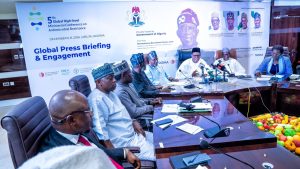
Speaking at the Press briefing held at the Conference Room of the Federal Ministry of Agriculture and Food Security today, 12th October 2026, the Coordinating Minister of Health and Social Welfare, Prof. Muhammad Ali Pate,
Described AMR as a “silent pandemic” and a complicated problem that kills quietly, said the threat requires a combined attack across human health, animal health, agriculture and the environment.
Pate noted that when antibiotics and other antimicrobials stop working, routine infections become dangerous, surgery and childbirth carry greater risk, and the cost of care rises for every family.
He said Nigeria is proud to host the 5th edition to deliver on global promises already made — the 2024 UN Political Declaration on AMR, the Muscat Manifesto and the Jeddah Commitments — with the Abuja conference billed to adopt the Abuja Compact on AMR.
The Coordinating Minister of Health and Social Welfare added that Nigeria’s approach goes beyond healthcare, adopting a One Health strategy that brings together health, agriculture, livestock and environment, warning against indiscriminate and wrong use of antibiotics and urging Nigerians to avoid self-medication and complete their doctor’s prescription to the end.
Also speaking, the Minister of Environment, Malam Balarabe Abbas Lawal, stressed that resistance does not respect boundaries between sectors as it moves from people to animals, from farms to food, and through water, soil and waste, hence no single ministry can win the fight alone.
He said the four ministries — Health and Social Welfare, Agriculture and Food Security, Livestock Development, and Environment — are committing to:
1. Act as one government, through a joint One Health coordination mechanism that will outlast the conference;
2. Deliver local action in every sector: responsible antimicrobial use in hospitals, on farms and in animal production, and safe management of waste and water;
3. Host an inclusive conference that gives voice to governments, scientists, civil society, youth, the private sector and communities; and
4. Be accountable, by reporting publicly on Nigeria’s progress and supporting follow-up of the Abuja Compact through the Troika mechanism.
Lawal stressed that a clean environment, improved sanitation, personal and community hygiene are critical to preventing infections that drive the need for antibiotics.
On his part, the Minister of Livestock Development, Idi Mukhtar Maiha, represented by the Chief Veterinary Officer, Dr. Abdukareem Durosunlorun,stressed the need for farmer education, warning farmers not to prioritise profit over human health. He urged poultry and livestock farmers to use antibiotics only on prescription and to strictly observe withdrawal periods before taking their products to the market.
In his welcome remarks, the Minister of State for Agriculture and Food Security, Sen. Dr. Aliyu Sabi Abdullahi, represented by the Director, Plant Health and Pest Control Services, Mrs Iwendi Grace Odunola, said AMR is not only a human health challenge but a significant threat to agriculture and food security. He noted that while antimicrobials are used to protect human, animal and plant health, their inappropriate or excessive use accelerates resistance, undermines disease control, reduces agricultural productivity, compromises food safety, disrupts trade and threatens farmers’ livelihoods.
According to him, the theme underscores the urgent need to translate global commitments into practical, measurable actions that protect people, agriculture, food systems and the environment, adding that the collective voice of the four ministries is critical because resistance can emerge and spread across people, animals, food systems and the environment.
From the agricultural perspective, he said the Ministry’s priorities include promoting responsible use of antimicrobials and agrochemicals, strengthening food safety systems, expanding agricultural extension services and educating farmers on good agricultural practices, biosecurity and Integrated Pest Management, with sustainable alternatives that protect crops, livestock, consumers and the environment.
The meeting, to be co-led by the four ministries and hosted by President Bola Ahmed Tinubu, will feature Non-State Actors Day, ministerial sessions on delivery, high-impact interventions and governance, and a closed-door ministerial roundtable culminating in the adoption of the Abuja Compact and handover of the Presidency to Brazil as host of the 6th meeting in 2028.
Ezeaja Ikemefuna
Head, Department of Information
12/10/2026
The Federal Government has reaffirmed its commitment towards the implementation of the National Cooperative Identity Reform under the Renewed Hope Cooperative Reform and Revamp Programme (RH-CRRP 2030) to transform Nigeria’s cooperative ecosystem into a credible, transparent and bankable economic bloc.
The Minister of State for Agriculture and Food Security and Supervising Minister of Cooperative Affairs, Sen. Dr. Aliyu Sabi Abdullahi, disclosed this today while delivering a keynote address at the 10th National Cooperative Summit, Exhibition and Awards organized by the Cooperative Federation of Nigeria (CFN) in Abuja.
At the Summit themed “Cooperative Reform: Unlocking Cooperative Potential for Peace, Sustainable Development and Economic Transformation,” Sen. Abdullahi stated that the reform has become imperative given global realities where approximately 3 million cooperatives represent over one billion members, provide jobs to about 280 million people, while the top 300 cooperatives generate about US$2.79 trillion in turnover.
He noted that Africa’s cooperative sector is valued at about $30 billion, with Savings and Credit Cooperatives (SACCOs) holding over $16 billion in assets and 40 million members, citing Kenya’s regulated SACCO asset base which grew to about KSh 1.076 trillion (US$8.3 billion) in 2024 as a model Nigeria must learn from.
The Minister emphasized that Nigeria with over 370,000 registered cooperative societies, more than 30 million members and an estimated annual turnover exceeding ₦1.7 trillion, still has its potential underutilised due to fragmentation, analogue administration and weak data.
He explained that the RH-CRRP 2030, unanimously approved by the 8th National Council on Cooperative Affairs in March 2026, provides a seven-pillar reform framework covering legal and regulatory reform, digitalization and data management, cooperative finance, capacity building, enterprise growth, socio-economic inclusion and strategic partnerships.
At the heart of the digitalization pillar, according to him, is the National Cooperative Digital Architecture Platform (NCDAP) which will deliver the National Cooperative Societies Register (NCSR), Cooperative Verifiable Number (CVN) and CoopID to provide credible cooperative identity, eliminate duplication and strengthen regulatory oversight.
Sen. Abdullahi disclosed that the reform targets growing cooperative assets from ₦1.7 trillion to ₦5 trillion within five years and ensuring the true value of the cooperative sector is captured in the computation of the national Gross Domestic Product (GDP).
He stated further that the Federal Government is also advancing the establishment of the Cooperative Bank of Nigeria (CoopBank) and the development of the Savings and Credit Cooperatives (SACCO) Model in Nigeria to improve access to appropriate finance.
On the institutional repositioning of the apex body, the Minister declared that the CFN, which was confronted by longstanding legacy challenges and divisions when the current administration came on board, is now crisis-free, solidly united and focused, and called on State Cooperative Federations and sectoral federations to cooperate with and strengthen the national apex.
Sen. Abdullahi stressed that going forward, cooperative success will be measured not by the number of societies registered but by assets created, businesses established, jobs generated, farmers supported and livelihoods improved.
He recalled that the Memorandum of Understanding (MoU) between the Federal Ministry of Agriculture and Food Security, CFN and SEAMFIX Limited as technical implementing partners was signed on August 12, 2026, and implementation has commenced at no cost to the Federal or State Governments.
The Minister therefore tasked State Directors of Cooperatives to give maximum support to the service providers for seamless nationwide implementation.
He also called on financial institutions, investors, technology companies and development partners to look again at Nigeria’s cooperative ecosystem, noting that with credible, verifiable data on over 30 million members, cooperatives now present a de-risked, organized market and platform for investment that enables members to aggregate inputs, mechanization, post-harvest handling, processing, storage and markets, while women and youth access affordable finance for food security, job creation and Nigeria’s journey to a US$1 trillion economy by 2030.
“Let this 10th National Cooperative Summit therefore mark our collective resolve to reposition Nigerian cooperatives beyond instruments of survival into engines of enterprise, instruments of inclusion and strategic institutions for national economic transformation,” the Minister added.
In her remarks, the President, Cooperative Federation of Nigeria, CFN, Mrs Hannatu Mershak stated that ‘’ the movement cannot afford fragmentation, we must strengthen cooperation among cooperatives encourage unity across zones and levels, promote transparency and accountability
Embrace technology and innovation, improve access to finance and develop our human capital, above all, we must remain firmly connected to the ordinary people whose economic aspirations gave birth to the corporative idea’’, she added.
Mrs Mershak appealed that ‘’ this summit should not end with speeches ,applause and photographs, let it end with renewed commitments , practical partnership and concrete actions, let build institutions that future generations will be proud to inherit’’
In an effort to accelerate agricultural development and strengthen policy implementation, the Federal Ministry of Agriculture and Food Security, in collaboration with state governments, non-state actors and development partners, including Germany, is advancing the implementation of the Comprehensive Africa Agriculture Development Programme (CAADP) Kampala Declaration 2026–2035.
This year’s CAADP Community of Practice (CoP) provides an important platform for strengthening cooperation around food security and the transformation of Nigeria’s agrifood systems.
Speaking during the Annual Community of Practice (CoP) Meeting held on Monday 5th October, 2026 in Maiduguri, the Borno State, the Minister of Agriculture and Food Security, Sen. Abubakar Kyari stated that ‘’Alignment between the Federal State Governments and Partners is indispensable to sustainable food security and resilient livelihoods’’.
The Minister noted that ‘’ the alignment must translate into compatible policies, reliable data, complementary investments and clarity of responsibility for delivery. We need one coherent agrifood system in which national direction and State-level execution reinforce one another’’.
He disclosed that’’ the responsibility has become even more important with the Kampala CAADP Declaration and its Strategy and Action Plan for 2026–2035. The Kampala framework takes a broader agrifood systems approach, with priorities spanning sustainable production, investment and finance, food and nutrition security, trade, inclusion, resilience and stronger governance’’
Sen. Kyari revealed that ‘’ His Excellency, President Bola Ahmed Tinubu, GCFR, has placed food security at the center of the national agenda. Our responsibility is to translate that mandate into increased production, greater affordability, stronger rural economies and a more resilient food system’’.
He Observed that ‘’ We have seen reductions of up to 50 per cent in the prices of some essential food commodities, alongside expanded input delivery, investments in rural infrastructure and support to smallholder farmers. The task now is to sustain these gains and deepen their impact.
He disclosed that’’ the responsibility has become even more important with the Kampala CAADP Declaration and its Strategy and Action Plan for 2026–2035. The Kampala framework takes a broader agrifood systems approach, with priorities spanning sustainable production, investment and finance, food and nutrition security, trade, inclusion, resilience and stronger governance’’
The Minister stressed that ‘’ For a country of Nigeria’s scale, the choices we make in agriculture have consequences beyond our borders, for regional markets, Africa’s wider agrifood transformation and Nigeria’s place in the global food economy. Nigeria has developed and validated a 10-Year National Agrifood System Strategy and Action Plan as the vehicle for domesticating these commitments. The Community of Practice provides an important sub-national mechanism for taking that work into implementation’’
He stated that ‘’ A Community of Practice earns its value when experience in one State shortens the learning curve for another and when progress can be assessed against agreed indicators. We should know what is working, where it is working, what it costs and what it takes to scale it. We should be equally candid about what is not working and why’’.
Kyari further revealed that ‘’the 10-Year National Agrifood System Strategy and Action Plan is designed to provide the harmonized implementation framework for this work, with clear roles, responsibilities, timelines and accountability mechanisms.
According to him, ‘’It also integrates CAADP Biennial Review indicators into national planning, budgeting and reporting systems. Through the validation process, we are working to align national and State budgets, reduce duplication and direct investment towards agreed priorities’’.
The Minister stated that ‘’ National Agricultural Technology and Innovation Policy is explicit that agricultural development should capitalize on the different production potentials and natural-resource endowments of Nigeria’s five major agricultural zones. Our task is to build on those comparative advantages with adaptable technologies, infrastructure and market linkages, rather than expect every State to produce everything’’.
On input security, early procurement under the Presidential Fertilizer Initiative, now under the Ministry of Finance Incorporated, helped secure supply for the 2026 season and generated ₦61.58 billion in savings. Nigeria remains on course to deliver a 1.1 million metric tonne fertilizer programme this year, Kyari said
The Minister mentioned that ‘’in August we unveiled the National Agricultural Mechanization Policy and the National Agricultural Mechanization Investment Strategy. Together, they provide the framework for moving from fragmented equipment interventions towards a sustainable mechanization ecosystem, including plans for a mega tractor assembly plant with capacity to produce between 2,000 and 4,000 tractors annually’’.
He stated that ‘’we are also expanding all-season production through irrigation, improved access to quality seed, support for our National Agricultural Research Institutes and stronger translation of research into practical solutions for farmers. The Special Agro-Industrial Processing Zones are designed to connect production areas more effectively to processing and markets. These investments must increasingly align with rural infrastructure, extension, agricultural finance, nutrition and the sustainable management of our land and water resources’’.
The Minister appealed for robust participation of women and young people across agricultural value chains and create stronger conditions for private investment and development finance.
He urged that ‘’States should leave this meeting clearer on how their action plans will advance the Kampala commitments and align with national priorities across rural infrastructure, extension, credit and quality inputs, labour-saving technologies, post-harvest loss reduction and climate-resilient agriculture’’
In his remarks, the Governor of Borno State, Prof. Babagana Zulum, represented by the Deputy Governor, Hon Usman Kadafur, stated that ‘’ the Summit is more than a gathering of policymakers, development practitioners, agricultural experts, researchers, farmers, private-sector actors and development partners. It is a platform for shared learning, honest reflection and collective action towards building a more resilient, productive and sustainable agricultural sector for our nation’’.
Governor Zulum stated that ‘’ a Community of Practice should not simply be a gathering where ideas are presented and applauded. It should be a platform where experience becomes knowledge, knowledge becomes action, and action produces measurable improvement in the lives of our people’’.
In her remarks, Dr Karin Jansen, Head of Development Cooperation at the German Embassy in Nigeria, said Germany welcomes Nigeria’s leadership in advancing the CAADP Kampala Agenda and is pleased to support the country as it moves from commitments to coordinated implementation.
She noted that the transformation of Nigeria’s agrifood systems requires strong cooperation between the Federal Government and the states, as well as the active participation of non-state actors.
Dr Jansen highlighted the importance of the CAADP Community of Practice as a mechanism that connects national priorities with action in the states and provides a platform for exchange, learning and joint problem-solving.
She recalled that the first Community of Practice focused on building a common understanding of the Kampala Declaration and strengthening state-driven approaches to implementation. The second Community of Practice, she said, marks the next step: moving from understanding to implementation and from commitments to coordinated action.
Dr Jansen stressed that states have a central role in translating national priorities into plans, budgets and concrete action for farmers, businesses and communities. Through the project “Sustainable Agricultural Systems and Policies” (AgSys), funded by the German Federal Ministry for Economic Cooperation and Development (BMZ) and implemented by the Deutsche Gesellschaft für Internationale Zusammenarbeit (GIZ) GmbH, Germany supports Nigerian partners in strengthening agricultural policy processes, scaling successful approaches and strengthening civil society participation.
She reaffirmed that Germany remains committed to supporting Nigeria and its partners in turning national commitments into concrete action and tangible results.
During his close remarks, the Minister of State for Agriculture and Food Security, Sen. Dr. Aliyu Sabi Abdullahi stated that ‘’a central theme emerging from our interactions is the need to leverage Nigeria’s comparative advantages. We must move beyond the siloed approach of the past. As we have discussed, the path to national food security is paved by each State focusing on its specific strengths’’
Sen. Dr. Aliyu Abdullahi added that ‘’we have reaffirmed that the challenges facing our agrifood systems are multidimensional. They require the kind of integrated, multi-sectoral approach that we have championed here. The synergy between the Ministries of Agriculture, Health, Environment, and Rural Development is not merely a bureaucratic ideal; it is a practical necessity. The nexus between food production, nutrition, environmental sustainability, and rural development is the cornerstone of our national prosperity’’.
The meeting had in attendance the Commissioners of Agriculture, Livestock, Fisheries, Health, Environment, Commerce and Rural Development, and other relevant stakeholders in the agricultural sector.
The Minister of Agriculture and Food Security, Sen. Abubakar Kyari, has called for a national digital farmers register to end duplication, target support to real farmers and secure food for over 200 million Nigerians.
The Minister made the call today, Monday, 29th September 2026, while declaring open the National Strategic Dialogue on AGROW Subcomponent 2.2 National Implementation Strategy and Digital Agriculture Architecture at the Abuja Continental Hotel.
He stated that Nigeria’s ambition to feed itself rests on knowing every farmer by name, farm location and what they grow, noting that a bag of fertilizer or a loan is only useful when the record directs it to the right farmer.
According to him, the work will build on what already exists, including the Ministry’s partnership with National Identity Management Commission (NIMC) to link farmers to their National Identity Number (NIN), the review of existing farmer databases with International Fund for Agricultural Development (IFAD), the Digital Villages project with Food and Agriculture Organization (FAO) of the United Nations, and the Ministry’s own data and mapping systems.
He charged States as essential owners to lead enumeration, verification and routine updates, while the Federal Ministry through Federal Department of Agricultural Data and Analytics (FDADA) and the National Project Coordination Office (NPCO) coordinates and enforces a single interoperable standard.
He stressed the need for one agricultural information ecosystem with agreed definitions, documented interfaces for authorized exchange, and clear data governance within Nigeria’s national digital infrastructure and data protection law.
Kyari added that State financing under AGROW will be linked to verified growth in farms registered, to ensure accuracy over mere numbers, and that the register must count every farmer including women, youth and those in areas without network coverage.
“We did not start talking about this today. Let this be the Dialogue that built Nigeria’s farmer registry,” he said.
In his remarks, the Minister of budget and National Planning, Abubakar Atiku Bagudu stated that stated that the authentic farmers’ registry would ensure adequate planning and budgeting. Furthermore, it would foster proper coordination between the federated units and the Federal Government to achieve food and nutrition security.
Earlier , the Minister of State for Agriculture and Food Security, Senator Dr. Aliyu Sabi Abdullahi, CON, stated that Nigeria’s agrifood transformation cannot be built on fragmented data, noting that the Ministry missed several opportunities to build a robust agricultural data system since the Agricultural Databank Project of the 1990s (NIR/87/012).
Abdullahi, who described Agricultural Data and Analytics as productive infrastructure as fundamental as roads and power, situated the Dialogue within five national goals: food security, food sovereignty, agro-industrial growth, export development and foreign exchange earnings, and environmental sustainability.
He noted that traceable data is critical to stop rejection of Nigeria’s hibiscus, sesame, cashew, ginger and cocoa at foreign ports and to command premium markets.
Abdullahi warned that the greatest threat to transformation is not technology or funding but institutional rivalry and lethargy, describing siloed territorial protection of data as “the quietest form of corruption of purpose” that leaves farmers registered three times in three incompatible systems or not at all.
He announced that the Federal Ministry has finalized the establishment of Federal Department of Agricultural Data and Analytics (FDADA) to serve as the sector’s data gatekeeper and anchorage, noting that Nigeria has historically invested heavily at data collection level but under-invested at knowledge and intelligence levels.
Abdullahi disclosed that the financing window under AGROW is open now and must not be dissipated into fragmentation, urging MDAs to be prepared to concede duplication, States to bring their readiness realities to shape the architecture, development partners to hold government to one system, and private sector to accept the discipline of interoperability.
In his welcome address, the Permanent Secretary, Dr. Marcus Olaniyi Ogunbiyi stated that ‘’the AGROW Project provides an important opportunity to strengthen agricultural productivity, develop value chains, create jobs and improve food and nutrition security. Within this broader agenda, Component 2.2 on Strengthening the Digital Agricultural Ecosystem is particularly significant’’
Dr. Ogunbiyi pointed out that ‘’Agriculture is increasingly becoming data-driven. Reliable information on farmers, farms, soils, weather, markets and production systems is essential for effective planning, better service delivery and informed decision-making’’.
He revealed that ‘’One of the critical pillars of Component 2.2 is the development of a national digital farm and farmer registry. This presents an enormous opportunity to address a longstanding challenge in agricultural planning – the absence of sufficiently reliable, current and interoperable information on our farmers and farms’’.
The Dialogue was convened by the Federal Ministry of Agriculture and Food Security, the Bank of Agriculture and the World Bank under the AGROW programme.
Ezeaja Ikemefuna
Head, Department of Information
29/9/2026
The Federal Government has charged State Director of Cooperatives from the 36 States and FCT to lead the practical rollout of the National Cooperative Smart Registry, NCSR, describing them as “Frontline Implementers, not spectators” in Nigeria’s cooperative sector transformation.
Speaking during the National Technical Workshop on Cooperative Sector Digitalization organized by the Ministry in collaboration with its Technical Partner, Seam fix Limited on Tuesday 11th August,2026, in Abuja, Minister of State for Agriculture & Food Security and Supervising Minister of Cooperative Affairs, Sen. Dr. Aliyu Sabi Abdullahi, said the workshop was convened to move from “Reform Conversations to Reform Implementation” under the Renewed Hope Cooperative Reform & Revamp Program, RH-CRRP 2030.
The Minister stated that the purpose of the workshop is to equip State Directors with the knowledge and tools to drive the digitalization agenda at state and community levels. “Distinguished Directors of Cooperatives, this is particularly why you are here. The Federal Government cannot successfully digitalize Nigeria’s cooperative sector from Abuja alone. Cooperative regulation and administration take place across our States and communities. You are therefore not spectators in this transformation; you Are Frontline Implementers,” he said.
Sen. Abdullahi urged them to understand the search, registration and validation workflow, how the Cooperative Verification Number, CVN, and Cooperative Member Identification Number, Coop ID, will be generated, and the responsibilities that will fall on State Cooperative Departments. “Ask questions. Challenge the process constructively. Seek clarification. Identify peculiarities within your States.
We are building a national infrastructure, and therefore it must work for every cooperative across the entire federation, “he charged.
The Minister explained that digitalization is designed to solve decades of identity and data gaps. “For too long we could not plan for cooperatives because we could not see them. We cannot effectively finance what we cannot identify. We cannot properly regulate what we cannot see. With NCSR, CVN and Coop ID, government, banks and development partners can now identify, verify, finance and regulate cooperatives with confidence,” he emphasized.
According to him, at the foundation of the transformation is the NCSR, which provides the infrastructure for cooperative search, registration, verification and digital governance. From the NCSR will emerge the CVN for cooperative organizations and Coop ID for members. Together, the NCSR, CVN and Coop ID will strengthen registration, identity verification, data management and regulatory oversight, while building trust, visibility and integrity within Nigeria’s cooperative ecosystem.
Sen. Abdullahi described cooperative sector digitalization as “not merely an ICT project, but an economic and institutional reform.” He warned that it “must not simply reproduce our existing manual inefficiencies on a computer screen.”
He added that it must improve transparency, strengthen accountability, make cooperative administration easier, provide reliable information for policy and planning, and ultimately deliver value to the ordinary cooperative member.
The Minister linked the digital infrastructure to the proposed Cooperative Bank of Nigeria, (Coop Bank), noting that the NCSR, CVN and Coop ID will provide the verified data and trust required for share subscription, credit profiling, risk management and sustainable operation.
He disclosed that the Bank will be “government-enabled, 7 cooperatively-owned, cooperatively-controlled and professionally managed,”_ and that share-subscription is targeted to commence by the end of October 2026, pursuant to resolutions of the 8th National Council on Cooperative Affairs.
The Minister also gave an update on the Ministerial Advocacy Tour, noting that the South-West, North-West and South-South zones have been covered. Visits to the North-Central, South-East and North-East will follow before the Coop Bank launch. He also revealed that tomorrow, the Federal Ministry of Agriculture and Food Security, the Cooperative Federation of Nigeria, (CFN), and technical partner Seam fix Limited will formally execute a Memorandum of Understanding to establish the framework for collaboration.
Under the Renewed Hope Agenda of President Bola Ahmed Tinubu, GCFR, the Minister stated that government is determined to build a cooperative ecosystem that is modern, inclusive, transparent and accountable, and capable of contributing significantly to food security, financial inclusion, job creation and shared prosperity. He called on the Federal Department of Cooperatives, State Directors, CFN, Institute of Cooperative Professionals of Nigeria, (ICOPRON), Seam fix and all stakeholders to approach implementation as a shared national responsibility.
Concluding, Dr. Abdullahi declared: “A New Era for Nigeria’s Cooperatives is here”
In a welcome address, the Permanent Secretary, Federal Ministry of Agriculture and Food Security, Dr. Marcus Ogunbiyi revealed that ‘’ the digital infrastructure we are building today, starting with the CVN and Smart Registry, will serve as the primary strategy for transparently delivering input subsidies, credit interventions, and technical assistance directly to verified cooperators under the AGROW initiative’’.
Dr. Ogunbiyi stated that ‘’the RH-CRRP 2030 is designed to modernize our cooperative sector to boost financial inclusion, eliminate fraudulent actors, and unlock capital for smallholder producers across and cooperative generally across the country’’.
He urged participants to engage actively during the technical sessions and to ensure that the outcomes of the workshop translate into concrete actions at state and grassroots levels for the benefit of cooperative members.
In attendance were Directors of Cooperatives from the 36 States and FCT, members of the RH-CRRP 2030 National Steering Committee, leadership of CFN and ICOPRON, representatives of MDAs, relevant institutions, development partners and technology experts
The Highlight was a live demonstration of the platform by the technical partner, Seam fix Limited.